CA-19/11/2025
AJEYA WARRIOR-25
Why in news?
The eighth edition (AJEYA WARRIOR-25) commenced on November 17, 2025, at Mahajan Field Firing Ranges in Rajasthan and will continue until November 30, 2025.
About
- Exercise AJEYA WARRIOR is a biennial joint military training exercise conducted between the Indian Army and the British Army, first initiated in 2011.
- The primary focus of this exercise is on counter-terrorism operations in semi-urban environments, conducted under a United Nations mandate.
- Training activities include brigade-level joint mission planning, integrated tactical drills, simulation-based training, and company-level field exercises.
- Facilitates deep exchange of operational experiences and combat skills between India and the UK.
- Strengthens military collaboration, as well as professional ties and mutual trust between the two countries.
- Supports regional stability and peacekeeping, focusing on interoperability and readiness for UN-mandated operations.
- Reinforces joint capabilities to respond to modern security threats, especially terrorism in semi-urban settings.
This exercise plays a crucial role in strengthening defense ties, operational synergy, and mutual trust between the Indian and British armed forces.
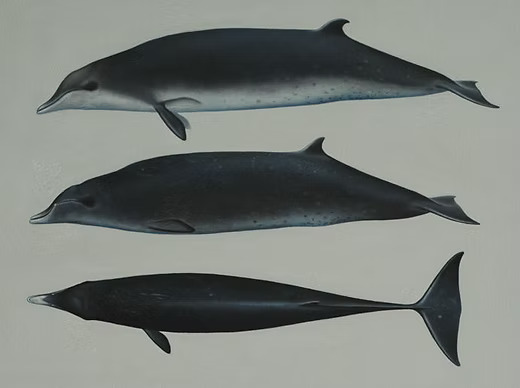
Mesoplodon ginkgodens (Ginkgo-toothed beaked whale)
Why in news?
- The ginkgo-toothed beaked whale, a rare and elusive deep-diving species, has been spotted alive in the wild for the first time off the coast of Baja California, Mexico.
- This marks a major breakthrough as these whales were previously known only from strandings and acoustic recordings.
- It is one of about 24 species of beaked whales and was first described scientifically in 1958.
- Named for its distinctive ginkgo leaf-shaped teeth found on males, which are broad, flat, and about 10 cm wide, located halfway along the lower jaw.
- These whales have a robust body compared to other mesoplodonts, with a distinct beak and no teeth in the upper jaw.
- They reach about 5 meters in length and weigh between 1.5 and 3.6 tons.
- They inhabit tropical and temperate waters of the Indian and Pacific Oceans, recorded from Japan, Taiwan, California, the Galapagos, New Zealand, Sri Lanka and nearby regions.
- Males do not show signs of combat scarring common in other beaked whales.
- The species has a distinct acoustic call signature, called BW43, which has recently helped researchers identify live individuals off California and Baja California coasts.
The ginkgo-toothed beaked whale (Mesoplodon ginkgodens) is currently listed as Data Deficient on the IUCN Red List, meaning there is insufficient information to assess its population status and trends accurately.
Parasocial
Why in news?
The Cambridge Dictionary has named "parasocial" as the Word of the Year for 2025
About
- Parasocial refers to a one-sided emotional connection someone feels towards celebrities, influencers, fictional characters, or even AI chatbots, where the other side does not know them.
- The term originates from research in 1956 by sociologists Donald Horton and Richard Wohl, who observed similar bonds viewers formed with television personalities.
- The term has become mainstream in 2025, reflecting how digital culture has intensified these one-sided relationships through screens and algorithms.
- Parasocial relationships can feel comforting, consistent, and intimate but are entirely one-sided and can sometimes lead to unrealistic expectations or unhealthy attachments.
- The rise of AI chatbots has expanded the concept, as people increasingly form parasocial bonds with AI entities.
- Cambridge Dictionary highlights "parasocial" as capturing the 2025 zeitgeist, showing a significant societal shift in how people connect emotionally in the digital age.
- Interest in parasocial relationships spiked with events like celebrity fandom (e.g., Taylor Swift) and the increasing role of influencers and AI in daily life.
Lycodon irwini
Why in news?
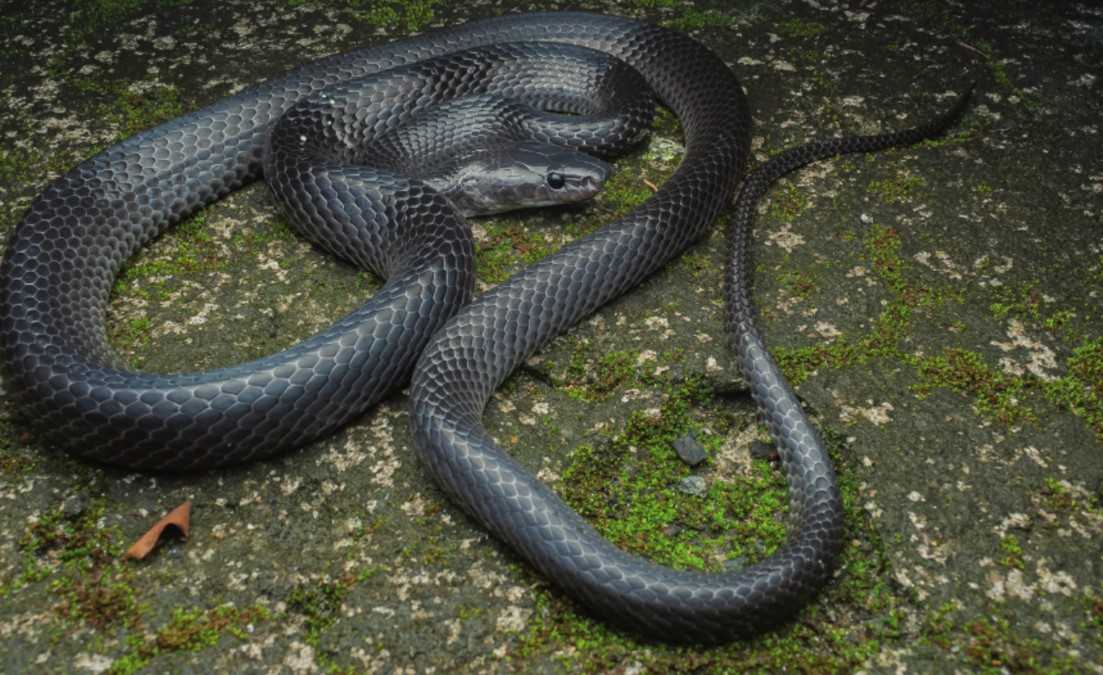
Lycodon irwini, also known as Irwin's wolf snake, is a newly discovered species of non-venomous snake native to the Great Nicobar Island.
Key points about Lycodon irwini
- The species was named in honor of the late Australian wildlife conservationist Steve Irwin, recognizing his global influence on wildlife education and conservation.
- Distinct for its uniform glossy black coloration, unlike related wolf snakes that typically have white bands or patches.
- The snake is slender, nocturnal, and can grow up to nearly 1.2 meters in length.
- It belongs to the Lycodon subcinctus group but differs genetically and morphologically, with higher numbers of belly and tail scales.
- It is nonvenomous and likely preys on reptiles.
- The species is currently known only from four records on the island, indicating it is endemic and rare.
- Given its restricted range and rarity, it is recommended to be classified as Endangered under IUCN criteria.
- Its habitat is moist evergreen forests of Great Nicobar Island.
The species highlights the high biodiversity and endemism of the Nicobar Archipelago and emphasizes the importance of continued conservation efforts there.
National Gopal Ratna Awards 2025
Why in news?
- The National Gopal Ratna Awards 2025 were announced by the Department of Animal Husbandry and Dairying under the Ministry of Fisheries, Animal Husbandry and Dairying.
- These awards are among the highest national honors in the livestock and dairy sector and will be conferred on November 26, 2025, during the National Milk Day celebrations.
- Awards categories include Best Dairy Farmer rearing indigenous cattle/buffalo breeds, Best Dairy Cooperative Society/Milk Producer Company/Farmer Producer Organization, and Best Artificial Insemination Technician (AIT).
- Cash prizes in the first two categories range from ?5 lakh for first place, ?3 lakh for second place, and ?2 lakh for third place.
- Winners in the AIT category receive a certificate and a memento only (no cash prize).
- The awards aim to promote scientific conservation and development of indigenous bovine breeds under the Rashtriya Gokul Mission.
- Best Dairy Farmer (Non-NER): 1st - Shri Aravind Yashavant Patil, Kolhapur, Maharashtra; 2nd - Dr. Kankanala Krishna Reddy, Hyderabad, Telangana; 3rd (joint) - Harshit Jhuria, Sikar, Rajasthan and Kumari Shraddha Satyawan Dhavan, Ahmednagar, Maharashtra.
- Best Artificial Insemination Technician (Non-NER): 1st - Mr. Dillip Kumar Pradhan, Anugul, Odisha; 2nd - Mr. Vikas Kumar, Hanumangarh, Rajasthan; 3rd - Mrs. Anuradha Chakali, Nandyal, Andhra Pradesh.
- Milk cooperative societies from the Malabar region also received top honors.
The awards foster indigenous breed improvement, dairy innovation, and enhanced breeding efficiency. The announcement and felicitation ceremony underscore the government's commitment to strengthening India's dairy sector.
India's sea cow- dugongs

Why in news?
India's first Dugong Conservation Reserve located in Palk Bay (448 sq km), Tamil Nadu, received formal global recognition by the International Union for Conservation of Nature (IUCN) at the World Conservation Congress 2025.
About Dugong
- Dugongs (Dugong dugon) are the only living members of the family Dugongidae and are closely related to manatees.
- Adults can reach about 3 m in length and several hundred kilograms in weight, feeding almost exclusively on seagrass, which is why they are popularly called “sea cows.”
- Help in carbon sequestration in coastal habitats
- Total population estimates vary between 200 and 450 individuals, concentrated mainly in Palk Bay-Gulf of Mannar, Andaman & Nicobar Islands, and Gulf of Kutch.
- Loss and degradation of seagrass habitats due to coastal development and pollution
- Accidental entanglement in fishing nets, Boat collisions and human disturbances
- Slow reproduction rate, females reproduce once every several years
- Listed as Vulnerable on the IUCN Red List
- Protected under Schedule I of the Wildlife (Protection) Act, 1972 in India
- National dugong recovery programme with Tamil Nadu, Gujarat, and Andaman & Nicobar
- Community awareness and scientific monitoring ongoing
- India is signatory to international agreements like the CMS Dugong MoU for protection
Pradhan Mantri Fasal Bima Yojana (PMFBY)
Why in news?
The Pradhan Mantri Fasal Bima Yojana (PMFBY) has been updated to include insurance coverage for crop losses due to wild animal attacks starting from the Kharif 2026 season.
About the update
- Crop losses caused by wild animals will be recognized as the fifth Add-on Cover under the Localised Risk category of PMFBY.
- This coverage is a major relief for farmers, especially those living near forests, wildlife corridors, and hilly terrains.
- Wild animals included in the coverage are elephants, wild boars, nilgai, deer, and monkeys, with states responsible for notifying the list of wild animals causing damage based on historical data.
- Farmers must report crop losses within 72 hours via the Crop Insurance App by uploading geotagged photographs of the damage.
- The revised framework aims to provide timely, transparent, and technology-driven claim settlements.
- Yield Losses (standing crops): Coverage for losses due to natural disasters such as:
- Natural fire and lightning,
- Storm, hailstorm, cyclone, typhoon, hurricane, tornado,
- Flood, inundation, landslide,
- Drought and dry spells,
- Pests and diseases.
- Coverage also includes losses before sowing due to adverse weather conditions that affect sowing or planting.
- Post-harvest losses caused by specific perils such as cyclonic rains, hailstorm, unseasonal rains during drying of crops in field after harvesting.
- The scheme covers food crops (cereals, millets, pulses), oilseeds, and annual commercial/horticultural crops as notified by the state government.
- The insurance is generally compulsory for loanee farmers and optional for others, covering both Kharif and Rabi seasons.
- Premium rates are typically 2% for Kharif food and oilseeds, 1.5% for Rabi food and oilseeds, and 5% for commercial crops.
- From the 2026 Kharif season, the scheme is set to include coverage for crop losses caused by wild animals.
Prevention of Money Laundering Act, 2002 (PMLA)
Why in news?
Enforcement Directorate's arrest Chairman of the Al Falah Group under Section 19 of the PMLA in connection with a ?415 crore money laundering case.
Key provisions of the PMLA include:
- It is a law enacted to prevent money laundering and provide for the confiscation of property derived from or involved in money laundering.
- Punishment for money laundering, which can include rigorous imprisonment of a minimum of three years extending up to seven or ten years depending on the severity and the scheduled offences involved, along with fines.
- The Act imposes obligations on banking companies, financial institutions, and intermediaries to verify clients' identities, maintain records, and furnish information related to suspicious transactions to the Financial Intelligence Unit (FIU-IND).
- The Act enables the government to confiscate properties involved in or derived from money laundering.
- Scheduled offences listed in the Act are crimes whose proceeds, when laundered, attract investigation under the PMLA.
- The Enforcement Directorate (ED) is the key investigative agency for PMLA cases.
Macaulay's mentality of slavery
Why in news?
Prime Minister Modi has recently called for India to break free from this colonial mindset and reclaim pride in Indian heritage and education.?
About Macaulay's mentality of slavery
- Thomas Babington Macaulay, a British Parliamentarian in 1835, introduced an education reform in India that is often criticized for imposing a "mentality of slavery" or "slave mindset" on Indians.
- Macaulay introduced English as the medium of instruction in India through his 1835 Minute on Education.
- This policy instilled a sense of inferiority among Indians, making them doubt their own culture and value Western ways above indigenous traditions.
- The policy aimed to create a class of Indians who were "Indian in blood and colour, but British in taste, opinions, morals, and intellect".
- Macaulay's reforms led to the closure of many indigenous institutions and universities that focused on Eastern philosophy.
- The British administration focused on educating only the elite, with the hope that knowledge would "filter down" to the masses (Downward Filtration Theory).
- Reclaiming pride in Indian heritage, languages, and knowledge systems by restoring faith in "Bhartiya" or indigenous knowledge.
- Promoting local languages alongside English, emphasizing that opposing Macaulay's legacy is not anti-English but pro-Indian languages.
- Overhauling education to emphasize India's civilizational genius and traditional knowledge that was diminished by Macaulay's colonial education system.
- Encouraging a cultural and cognitive decolonization that rebuilds pride in India’s own history and ecosystems, including supporting the "Made in India" manufacturing framework.
- Setting a clear 10-year roadmap to erase the mental slavery and restore national self-confidence by the 200th anniversary of Macaulay’s campaign in 2035.
International Big Cat Alliance (IBCA)
Why in news?
- India's reaffirmed global leadership in big cat conservation, announced at the UNFCCC climate conference CoP30 in Belém, Brazil, in November 2025.
- India plans to host a Global Big Cats Summit in New Delhi in 2026 to bring together all big cat range countries and conservation partners to share experiences, strategies, and strengthen global partnerships.
- The International Big Cat Alliance (IBCA) is a global treaty-based organization headquartered in India.
- It is dedicated to the collaborative conservation of seven principal big cat species: tiger, lion, leopard, snow leopard, cheetah, jaguar, and puma.
- IBCA was launched by India in April 2023, marking the 50th anniversary of Project Tiger.
- Prevent illegal trade and poaching of big cats.
- Promote habitat conservation and restoration.
- Mobilize international financial and technical resources for effective protection and monitoring.?
- As of late 2025, there are 27 countries that have joined the International Big Cat Alliance (IBCA) and its number continues to grow.
- The alliance is governed by an assembly (first held in New Delhi in June 2025) and is led by ministerial representatives from member countries.
- The Ministry of External Affairs (India) serves as the depository of its framework agreement.
- Partnerships include international bodies such as IUCN, WWF, UNDP, International Snow Leopard Trust, and Cheetah Conservation Fund.
- India plays a leadership role, replicating its successful Project Tiger model and best practices in big cat conservation.
- Five of the seven covered species are found in India (tiger, lion, snow leopard, leopard, cheetah).
- The alliance enhances international cooperation and ensures long-term landscape protection, supporting local communities dependent on these ecosystems.
Question and Answer
Question 1. Lycodon irwini, a newly discovered non-venomous snake species, is endemic to which of the following regions?
A) Western Ghats, India
B) Northeast India, bordering Myanmar
C) Great Nicobar Island, India
D) Sundarbans, India and Bangladesh
Explanation:
Lycodon irwini, or Irwin's wolf snake, is a newly discovered species of non-venomous snake native to the Great Nicobar Island, indicating its endemic nature to this region.
Question 2. The National Gopal Ratna Awards, recently announced, are aimed at promoting the scientific conservation and development of indigenous bovine breeds under which of the following missions?
A) National Livestock Mission
B) Rashtriya Gokul Mission
C) Dairy Entrepreneurship Development Scheme
D) National Programme for Bovine Breeding
Explanation:
The National Gopal Ratna Awards aim to promote scientific conservation and development of indigenous bovine breeds under the Rashtriya Gokul Mission, highlighting the government's commitment to strengthening India's dairy sector.
Question 3. Which of the following agencies is the key investigative body for cases under the Prevention of Money Laundering Act, 2002 (PMLA)?
A) Central Bureau of Investigation (CBI)
B) National Investigation Agency (NIA)
C) Enforcement Directorate (ED)
D) Serious Fraud Investigation Office (SFIO)
Explanation:
The Enforcement Directorate (ED) is the key investigative agency for PMLA cases, responsible for enforcing the Act's provisions, which include prevention of money laundering and confiscation of property derived from such activities.
Question 4. The Mesoplodon ginkgodens (Ginkgo-toothed beaked whale), recently spotted alive for the first time in the wild, is characterized by which of the following unique features?
A) Prominent dorsal fin with striking black and white patterns.
B) Bright bioluminescent organs used for hunting in deep waters.
C) Ginkgo leaf-shaped teeth found on males, located halfway along the lower jaw.
D) Ability to change skin color to camouflage with its surroundings.
Explanation:
The Mesoplodon ginkgodens is named for its distinctive ginkgo leaf-shaped teeth found on males, which are broad, flat, and about 10 cm wide, located halfway along the lower jaw.
Question 5.
The term 'parasocial', recently named Word of the Year for 2025 by Cambridge Dictionary, primarily refers to:
A) A close friendship formed between two individuals over social media platforms.
B) A one-sided emotional connection felt towards public figures or fictional characters.
C) The phenomenon of forming online communities around shared hobbies or interests.
D) The psychological impact of excessive screen time on social interactions.
Explanation:
Parasocial refers to a one-sided emotional connection someone feels towards celebrities, influencers, fictional characters, or even AI chatbots, where the other side does not know them. This term gained prominence reflecting how digital culture has intensified these one-sided relationships.
Question 6. The recent update to the Pradhan Mantri Fasal Bima Yojana (PMFBY) to cover crop losses due to wild animal attacks most directly addresses which of the following policy convergences?
A) Enhancing food security through increased agricultural productivity and reducing rural-urban migration.
B) Mitigating human-wildlife conflict impacts on farmers' livelihoods and promoting conservation through community engagement.
C) Promoting sustainable farming practices and reducing the use of chemical fertilizers and pesticides.
D) Facilitating market access for agricultural produce and ensuring fair prices for farmers.
Explanation:
The inclusion of wild animal attack coverage under PMFBY directly addresses the significant issue of human-wildlife conflict. This policy move aims to provide relief to farmers whose livelihoods are affected by wildlife, thereby indirectly fostering a more harmonious coexistence and potentially reducing retaliatory actions against animals, which contributes to conservation.
Question 7. Which of the following statements best describes the primary objective of Thomas Babington Macaulay's education reforms in India in 1835?
A) To promote indigenous languages and preserve traditional Indian knowledge systems.
B) To create a class of Indians who would be Indian in blood and colour, but British in taste, opinions, morals, and intellect.
C) To establish universal primary education for all sections of Indian society.
D) To introduce vocational training programs to foster industrial development in India.
Explanation:
Macaulay's reforms aimed to create a class of Indians who could serve as intermediaries between the British rulers and the vast Indian populace, steeped in Western education and values. This is encapsulated in the statement: 'Indian in blood and colour, but British in taste, opinions, morals, and intellect'.
Question 8. With reference to the recent update in the Pradhan Mantri Fasal Bima Yojana (PMFBY), consider the following statements:
1. Crop losses due to wild animal attacks will be included as a new Add-on Cover under the Localised Risk category.
2. This coverage will be available for all types of crops from the Kharif 2026 season onwards.
3. Farmers are required to report crop losses caused by wild animals within 24 hours of the incident.
Which of the statements given above is/are correct?
A) 1 only
B) 1 and 2 only
C) 2 and 3 only
D) 1, 2 and 3
Explanation:
Statement 1 is correct: Crop losses caused by wild animals will be recognized as the fifth Add-on Cover under the Localised Risk category of PMFBY. Statement 2 is incorrect: The scheme covers food crops (cereals, millets, pulses), oilseeds, and annual commercial/horticultural crops as notified by the state government, not necessarily all types of crops. Statement 3 is incorrect: Farmers must report crop losses within 72 hours, not 24 hours.
Question 9. Consider the following statements regarding Dugongs:
1. They are primarily found in temperate waters and are known for their fast reproductive rates.
2. India's first Dugong Conservation Reserve has recently received global recognition from the International Union for Conservation of Nature (IUCN).
3. They contribute to carbon sequestration by feeding almost exclusively on seagrass.
Which of the statements given above is/are correct?
A) 1 and 2 only
B) 2 and 3 only
C) 3 only
D) 1, 2 and 3
Explanation:
Statement 1 is incorrect: Dugongs inhabit tropical and sub-tropical waters and have a slow reproduction rate (females reproduce once every several years). Statement 2 is correct: India's first Dugong Conservation Reserve in Palk Bay received formal global recognition by the IUCN at the World Conservation Congress 2025. Statement 3 is correct: Dugongs feed almost exclusively on seagrass, which helps in carbon sequestration in coastal habitats.
Question 10. Exercise AJEYA WARRIOR, recently in news, is a biennial joint military training exercise conducted between which two countries, primarily focusing on counter-terrorism operations under a United Nations mandate?
A) India and the United States
B) India and the United Kingdom
C) India and France
D) India and Japan
Explanation:
Exercise AJEYA WARRIOR is a biennial joint military training exercise conducted between the Indian Army and the British Army, focusing on counter-terrorism operations in semi-urban environments under a United Nations mandate.
Question 11. Which of the following best reflects a holistic approach to wildlife conservation, as increasingly emphasized by recent initiatives in India?
A) Exclusive focus on establishing protected areas, restricting all human access.
B) Prioritizing the conservation of charismatic megafauna over lesser-known species.
C) Integrating community participation, scientific monitoring, habitat restoration, and international collaboration.
D) Relying solely on legal frameworks and penalties for wildlife protection.
Explanation:
A holistic approach to conservation, as seen in India's dugong recovery program, IBCA, and new species conservation efforts, integrates multiple strategies. These include community awareness and involvement, scientific monitoring, habitat conservation and restoration, and strong international collaboration, moving beyond mere legal protection or restricted areas.
Question 12
The International Big Cat Alliance (IBCA), recently announced its expansion at CoP30 in Brazil, is dedicated to the collaborative conservation of how many principal big cat species?
A) 5
B) 6
C) 7
D) 8
Explanation:
The International Big Cat Alliance (IBCA) is dedicated to the collaborative conservation of seven principal big cat species: tiger, lion, leopard, snow leopard, cheetah, jaguar, and puma.
Download Pdf

