CA-16/11/2025
Air-Sol Moyenne Portée-Renove (ASMPA-R)
The Air-Sol Moyenne Portée-Renove (ASMPA-R) is the most recent and advanced iteration of France's ASMP family of medium-range, nuclear-capable, supersonic air-launched cruise missiles.
- It was modernized to address evolving threats and ensure the continued credibility of France’s airborne nuclear deterrence capability until the next-generation ASN4G hypersonic missile replaces it around 2035.
Key Features
- ASMPA-R is powered by a liquid-fuel ramjet engine, allowing supersonic speeds up to Mach 3.
- The missile has an extended range of approximately 600 km (372 miles), which is an improvement over the previous ASMP-A version's range of 500 km.
- It carries the Tête Nucléaire Aéroportée (TNA) thermonuclear warhead, which is reported to have a variable (dial-a-yield) setting between 100–300 kilotons.
- The missile is currently deployed with both the French Air and Space Force (FAS) and French Navy, specifically on Dassault Rafale combat aircraft for both services.
- The missile underwent successful test firings—first in December 2021, followed by further tests in March 2022 and in May 2024 during "Operation Durandal," simulating operational scenarios.
Strategic Role
- ASMPA-R forms a critical part of France’s air-based nuclear deterrent and fits within the broader 2024–30 Strategic Military Programming Law (LPM).
- Its enhanced survivability, improved range, and upgraded components have been designed to penetrate advanced air defense systems, ensuring the airborne component of France’s nuclear triad remains a credible "pre-strategic" deterrent.
- Deployment of the ASMPA-R enables French forces to carry out strategic missions from standoff distances, increasing both platform and crew survivability.
Operational Integration
- The missile is integrated on Rafale F3R and Rafale-M platforms of the French Air and Space Force and Navy.
- Major strategic exercises, such as Operation Durandal and Operation Diomede, have validated its combat-readiness and operational integration.
Future Outlook
- ASMPA-R will remain in service until the forthcoming ASN4G replaces it after 2035, bridging the gap and maintaining effective deterrence against modern air defenses.
- This modernization of the ASMPA-R marks a significant step forward in ensuring the credibility and operational viability of France's airborne nuclear strike capabilities into the next decade.
Tungsten
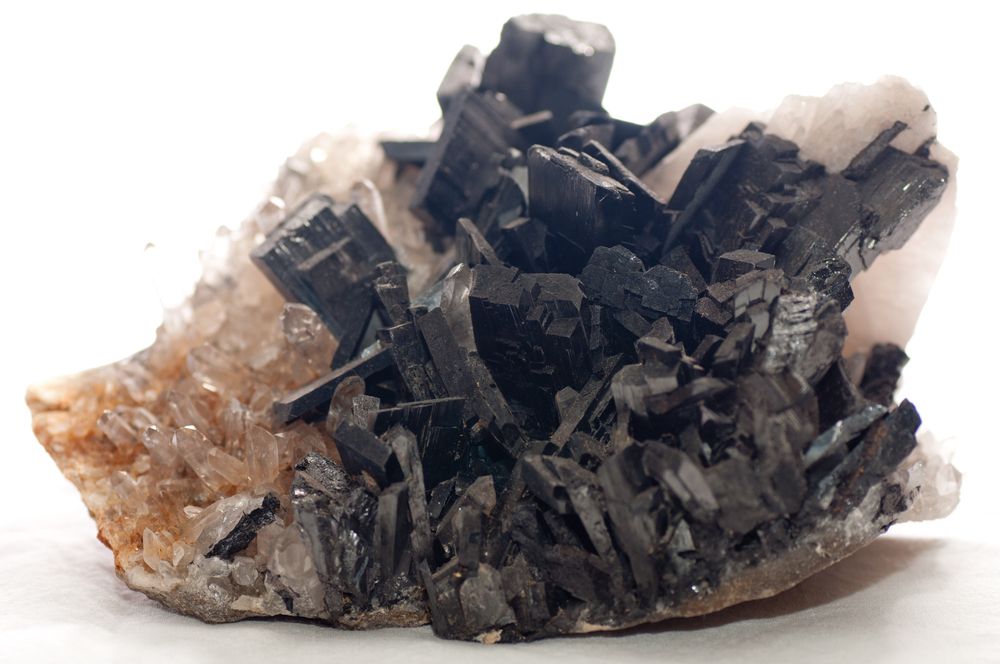
Recently, the Hindustan Zinc Ltd (HZL) has received the licence to explore and mine a tungsten block in Andhra Pradesh.
About Tungsten
- Tungsten is a chemical element with the symbol W (from the German name Wolfram) and atomic number 74.
- It is a dense, steel-grey transition metal found naturally on Earth primarily in compound forms such as the minerals wolframite and scheelite.
- Tungsten was identified as a distinct element in 1781 and first isolated as a metal in 1783.
Key properties of tungsten include:
- It has the highest melting point of all metals, at about 3410 °C.
- It has the lowest vapor pressure among metals at its melting point.
- It possesses the highest tensile strength at temperatures over 1650 °C.
- Tungsten is exceptionally dense (19.3 g/cm³), comparable to gold and uranium.
- It is hard, brittle in raw form but can be malleable and worked after purification.
- It exhibits excellent corrosion resistance, attacked only slightly by most acids.
- Tungsten's notable uses arise from its high melting point, hardness, resistance to wear, and ability to conduct electricity.
Common applications include:
- Filaments for electric light bulbs and electron tubes.
- X-ray targets and high-temperature furnace components.
- Tungsten carbide, an exceptionally hard compound used in metalworking, mining, and petroleum industries for cutting tools and abrasives.
- Alloying metal to strengthen steels.
- Ballast weights in aircraft and motorsports.
- Welding electrodes.
Tungsten also finds uses in catalysts, ceramic pigments, fire retardant coatings, and color-resistant dyes for fabrics. Despite being useful biologically in some bacteria, it is generally toxic to most animals.
Overall, tungsten's unique combination of extreme hardness, high melting point, density, and electrical conductivity makes it valuable in industrial, scientific, and military applications.
Overall, tungsten's unique combination of extreme hardness, high melting point, density, and electrical conductivity makes it valuable in industrial, scientific, and military applications.
Exercise Garuda 2025
The 8th edition of the bilateral air exercise 'Garuda 25' between the Indian Air Force (IAF) and the French Air and Space Force (FASF) is currently underway in Mont-de-Marsan, France, from November 16 to November 27, 2025.
Exercise Garuda 2025
- Exercise Garuda is a bilateral air force exercise conducted between the Indian Air Force (IAF) and the French Air and Space Force (FASF). The first edition was held in 2003, and the 2025 edition is the 8th iteration of this exercise.
- Exercise Garuda 2025 is being held at the Mont-de-Marsan Air Base in France from November 16 to 27, 2025.
- The Indian Air Force contingent arrived in France on November 10, 2025, with Su-30MKI fighter aircraft. This edition features Indian Su-30MKI jets operating alongside French Rafale multirole fighters in simulated complex air combat scenarios.
- The focus of the exercise includes air-to-air combat, air defense, joint strike operations, interoperability enhancement, tactical maneuvers, air-combat training, air refueling, and mission planning.
- The exercise serves to refine tactics and procedures in realistic operational environments, fostering mutual learning between the two air forces and enhancing interoperability.
- Strategic significance includes strengthening Indo-French defense cooperation, boosting India's air power projection, and providing exposure to advanced air force tactics and technology of the French Air and Space Force.
- Airlift support for the IAF is provided by C-17 Globemaster aircraft, and air-to-air refueling is conducted with IL-78 tankers to extend the range and endurance of Su-30MKI jets.
- Exercise Garuda underscores the deep strategic partnership between India and France, spanning defense, technology, and security cooperation.
This exercise builds on over two decades of cooperation and aims to enhance professional interaction, operational knowledge exchange, and readiness for multifaceted air operations between India and France.
Greenland

Recently, Greenland's Parliament has adopted legislation limiting foreigners' right to own property on the island.
About Greenland
Greenland is the world's largest island, an autonomous territory within the Kingdom of Denmark. Most of its area is covered by the world's second-largest ice sheet, with human settlement concentrated on the ice-free coastal areas.
General facts about Greenland
| Characteristic | Description |
| Capital | Nuuk, located on the southwest coast, is also the largest city. |
| Official Language | Greenlandic (Kalaallisut), an Inuit language, is the sole official language. Danish is also commonly spoken. |
| Population | As of 2025, the estimated population is about 57,000, making it the most sparsely populated territory in the world. The majority are of Inuit descent. |
| Geography | Located between the Arctic and Atlantic Oceans, Greenland is mostly covered by a massive ice sheet. The ice-free areas are along the coastline, which features fjords and rocky, mountainous terrain. |
| Economy | Fishing, especially shrimp and halibut, is the dominant industry. The economy is heavily dependent on subsidies from Denmark. Greenland also has significant mineral and rare-earth element deposits, and tourism is a growing sector. |
Climate and environment
- Arctic climate: Greenland has an Arctic to subarctic climate, with long, cold winters and short, cool summers.
- Melting ice sheet: The ice sheet is the second largest in the world after Antarctica's. Due to climate change, it is melting at an accelerated rate, which contributes to rising global sea levels.
- Wildlife: The rugged environment is home to polar bears, musk-oxen, seals, and whales.
History and government
- Indigenous roots: The ancestors of today's Inuit migrated from North America around 4,500 years ago.
- Norse settlement: Norse settlers, led by Erik the Red, established settlements in the 10th century but disappeared by the 15th century for reasons that are not fully understood.
- Home rule: Greenland became an integral part of Denmark in 1953 and was granted home rule in 1979. The Self-Government Act of 2009 further expanded its autonomy.
- Political system: Greenland is a parliamentary democracy within a constitutional monarchy, with Denmark managing foreign relations and defense. The local legislature is called the Inatsisartut.
Territorial Army
The latest news regarding the Territorial Army (TA) primarily concerns the imminent induction of women as soldiers and ongoing recruitment drives across various zones.
About Territorial Army
- The Territorial Army (TA) of India is a part-time, voluntary military reserve force composed of civilians who receive military training to support and augment the regular Indian Army without giving up their primary civilian occupations.
- It was established officially by the Territorial Army Act of 1948 and inaugurated in 1949.
- The key role of the TA is to relieve the regular army from static duties, assist civil administration in managing natural calamities and essential services, and provide additional units for the regular army when required.
- The TA has around 50,000 personnel across 65 departmental and non-departmental units, including infantry battalions, ecological task forces focused on afforestation and environmental protection, and engineering regiments for operations like maintenance of border fencing.
- It is headed by a three-star officer and works under the Department of Military Affairs in the Ministry of Defence.
The eligibility criteria and age limits
- Nationality: Only citizens of India (both male and female) are eligible.
- Age Limits: Candidates must be between 18 to 42 years of age as on the last date of filing the application. This means the minimum age is 18 years, and the maximum age allowed is 42 years. There is generally no age relaxation for reserved categories (SC/ST/OBC), as this age bracket already accommodates working professionals. Ex-servicemen also have the upper age limit of 42 years.
- Educational Qualification: Candidates applying for the Officer post must be graduates from any recognized university. For soldier or clerk posts, educational requirements may differ, often requiring a minimum of class 12 for clerks.
- Employment Status: Candidates must be gainfully employed in a civil job or self-employed, as the TA is a part-time commitment.
- Physical and Medical Fitness: Candidates must be physically and medically fit to undertake military training and service, as certified through medical examinations.
Other documents required include identity proof, age proof, domicile/residence certificate, service certificate or no-objection certificate (NOC) from the employer, and a recent physical fitness certificate from a qualified doctor.
Role and Duties
The primary role of the Territorial Army includes:
Role and Duties
The primary role of the Territorial Army includes:
- Relieving the Regular Army from static duties and guarding critical infrastructure.
- Assisting civil administration during natural calamities, tragedies, and in the maintenance of essential services.
- Providing units to the regular army as and when required.
- Counter-insurgency operations in regions like Jammu & Kashmir and the North-East.
- Ecological restoration through dedicated Ecological Battalions that engage in afforestation and soil conservation efforts.
Ashtamudi Lake
Researchers aims to unravel mechanisms driving unique cooperation between wild dolphins and traditional fishers in Ashtamudi Lake.
About Asthamudi Lake
- Ashtamudi Lake is a unique, large, palm-shaped wetland ecosystem located in the Kollam District of Kerala, India.
- It is the second largest lake in Kerala, after Vembanad Lake, covering about 38 to 61.4 square kilometers.
- The name "Ashtamudi" means "eight peaks" in Malayalam, referring to the lake's eight distinct arms or channels, indicative of its intricate topography.
- The lake is fed by several rivers, notably the Kallada River, and drains into the Arabian Sea via the Neendakara estuary.
- It is Kerala's deepest estuary with a maximum depth of about 6.4 meters.
- The lake supports a rich biodiversity, including numerous fish species, shellfish like short-neck clams, and extensive aquatic flora.
- Ashtamudi Lake is also a critical habitat for migratory waterfowl and a nursery for commercially important marine species.
- It is significant both ecologically and economically. The lake sustains local livelihoods through fishing, coir production from coconut husk retting, and tourism, especially houseboat cruises.
- In 2002, Ashtamudi Lake was designated a Ramsar site, recognizing its international importance as a wetland.
The lake faces environmental challenges such as salinity intrusion and pollution from urban and industrial discharge. Annually, about 25,000 tourists visit, and it hosts the famous President Trophy Boat Race, a major cultural event in Kerala.
Vrindavani Vastra
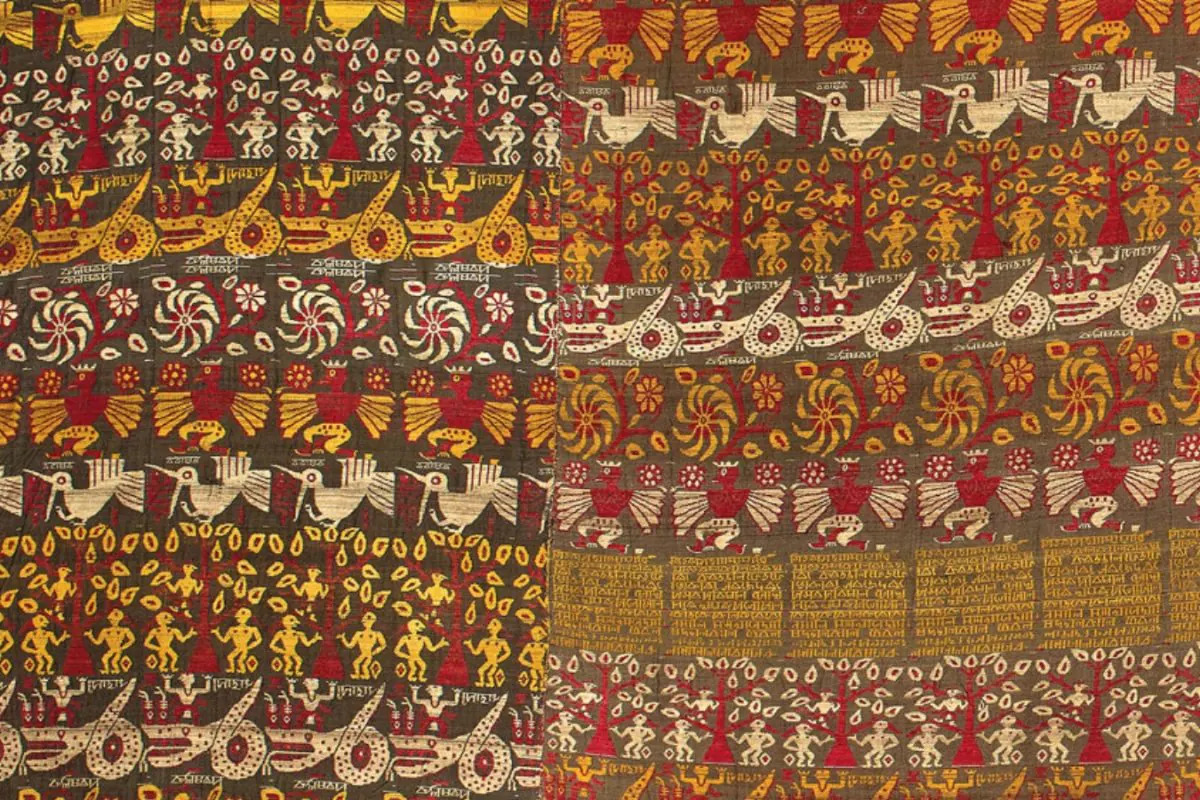
The latest news on Vrindavani Vastra is that the Assam government, led by Chief Minister Himanta Biswa Sarma, is set to sign a Memorandum of Understanding (MoU) with the British Museum to bring the historic 16th-century Vrindavani Vastra to Assam on loan for an exhibition in 2027. This will be the first time in over a century that the textile will return to its place of origin. The exhibition is planned to last around 18 months.
Key points include:
- The Vrindavani Vastra is a silk textile woven under the guidance of Vaishnava saint Srimanta Sankardeva in the 16th century, depicting tales from Lord Krishna’s life.
- The British Museum agreed in principle to lend the textile on the condition that Assam builds a dedicated museum meeting international standards for conservation, climate control, and security.
- Assam has allotted land in Guwahati’s Khanapara area for this purpose, with the JSW Group funding and constructing the heritage museum, which will be owned by the state government.
- The Indian government, including Prime Minister Narendra Modi and the Indian High Commissioner to the UK, is kept updated on the process.
- The British Museum also plans to assist in creating a digital reproduction of the Vastra to expand educational access prior to the physical exhibition.
- The agreement is considered a historic cultural homecoming and a significant Indian art repatriation effort.
This milestone is expected to happen in 2027 after an MoU finalization and subsequent museum preparations.
About Vrindavani Vastra:
About Vrindavani Vastra:
- The Vrindavani Vastra is a magnificent silk textile created in the 16th century under the spiritual guidance of Srimanta Sankardeva, a saint-reformer central to Assam's Vaishnavite movement.
- It was commissioned by Koch king Nara Narayan and woven by Assamese weavers led by Mathuradas Burha Aata, a disciple of Sri Sri Madhabdev.
- The textile vividly depicts scenes and childhood activities from the life of Lord Krishna in Vrindavan, including episodes of his divine pastimes and reincarnations of Vishnu.
- The cloth consists of multiple silk strips (typically 12 to 15), which were woven separately using the highly complex "lampas" weaving technique that requires two weavers working simultaneously and then stitched together to form a large tapestry measuring about 9.37 meters by 2.31 meters.
- It also contains portions of devotional texts and captions from Sankardeva’s writings, such as lines from the devotional play "Kaliyadamana" woven into the fabric.
- The Vrindavani Vastra is not only an artistic masterpiece but also a symbolic religious artifact reflecting the Neo-Vaishnavite Bhakti movement led by Srimanta Sankardeva, aimed at propagating devotion and spiritual enlightenment through visual art.
- It stands as a significant testimony to Assamese cultural identity, weaving craftsmanship, and the syncretic religious traditions of Assam, symbolizing the region’s rich heritage.
- Historically, the textile traveled from Assam to Bhutan and Tibet, eventually being acquired by European collectors and museums such as the British Museum and the Victoria & Albert Museum, with parts still held in Paris at the Guimet Museum.
This textile is a rare surviving devotional art piece combining religious, cultural, and artistic elements from medieval Assam and continues to inspire researchers, historians, artists, and devotees alike.
Virus Disease
Recently, the World Health Organization (WHO) said that Ethiopia has reported its first-ever outbreak of Marburg virus disease.
About Marburg Virus Disease
- Marburg Virus Disease (MVD), a severe and often fatal viral hemorrhagic fever, is caused by the Marburg virus, a pathogen in the same family (Filoviridae) as the Ebola virus.
- The disease was first identified in 1967 during simultaneous outbreaks in Marburg and Frankfurt, Germany, and Belgrade, Serbia, which were linked to laboratory work using African green monkeys imported from Uganda.
Symptoms
After an incubation period of 2 to 21 days, the illness begins abruptly with symptoms that are difficult to distinguish from other tropical diseases like malaria or typhoid fever. Initial symptoms include:
- High fever, severe headache, and malaise
- Muscle aches and pains
- Severe watery diarrhea, abdominal pain, nausea, and vomiting
- A non-itchy rash on the chest, back, and stomach around day five
As the disease progresses, more severe symptoms like jaundice, inflammation of the pancreas, and severe bleeding can develop. Fatal cases often die from major blood loss and shock, typically 8 to 9 days after symptoms begin.
Transmission
Transmission
- Egyptian fruit bats are believed to be the natural hosts of the Marburg virus.
- Initial human infection can occur from exposure to environments inhabited by these bats.
- Transmission among humans happens through direct contact with infected bodily fluids or contaminated surfaces.
- Healthcare workers and family members are at higher risk without proper infection control.
Diagnosis
Laboratory confirmation is essential due to non-specific early symptoms. Tests include RT-PCR, antigen-capture detection tests, and IgM antibody detection.
Treatment and Prevention
There are no approved vaccines or specific antiviral treatments for MVD. Treatment is supportive, focusing on managing symptoms and secondary infections. Candidate vaccines and treatments are under development.
Prevention involves avoiding contact with infected bats or non-human primates in affected areas, implementing strict infection control in healthcare settings including using personal protective equipment, and safe burial practices.
Checkered Keelback
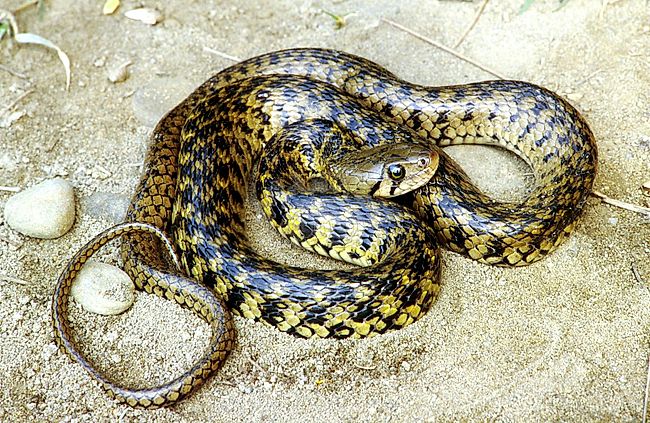
The latest news regarding the Checkered Keelback (also known as the Asian water snake) is the first-ever documentation of an albino specimen in the state of Assam, India.
About Checkered Keelback (Fowlea piscator):
- Commonly known as the Asiatic water snake, it belongs to the family Natricinae.
- Medium-sized snake that can grow up to around 1 to 1.75 meters in length.
- Has a slender, elongated, yet stout body covered with keeled scales arranged in typically 19 rows.
- Body color is highly variable: olive-brown, olive-green, yellow, or red, commonly with a black checkered pattern or large black blotches; underside is usually off-white or light yellow.
- Characteristic markings include two oblique black streaks—one below and one behind the eye—and sometimes an inverted black "V" or "W" mark on the neck.
- Head is pointed and slightly broader than the neck with 9 upper labials; the 4th and 5th labials usually enter the eye.
- Lives primarily in freshwater habitats such as ponds, lakes, marshes, rice fields, irrigation tanks, and sometimes urban water bodies.
- Geographic distribution covers South Asia including India, Pakistan, Bangladesh, parts of Southeast Asia, southern China, and Taiwan.
- Diet consists of fish, frogs, small reptiles, rodents, birds, and smaller snakes.
- Behaviorally, it is active by day and sometimes by night, showing voracious feeding habits and aggressive biting when threatened; though venomous with rear fangs (opisthoglyphous), it poses little danger to humans.
- Juveniles have a yellow neck mark that fades with age and are active predators soon after hatching, feeding on frogs, tadpoles, small fish, and insects.
- Known for its adaptability to human environments, it is found in rural and urban water bodies, even sewers and backyards.
- No major conservation threats have been noted for this species.
Maram Naga Tribe

Centre recently sanctioned Rs 9 crore under Jan Man Scheme for Maram Naga tribe development, welfare projects, and cultural preservation in Manipur.
About Maram Naga Tribe
The Maram Naga tribe is a Tibeto-Burmese ethnic group primarily inhabiting the Senapati district of Manipur, Northeast India. They are known for their distinct language, rich cultural heritage, and traditional practice of wet-rice cultivation.
Key Characteristics
- Location: The Marams primarily reside in the Senapati district of Manipur, with their main area falling under the Tadubi sub-division.
- Population: The estimated population of the Maram people is around 43,577 according to the 2011 census, spread across approximately 38 villages.
- Language: They speak the Maram language, which is part of the Sino-Tibetan language family and has been listed as "vulnerable" by UNESCO's endangered languages database. The Meitei language is used as their second language (L2).
- Occupation: The main occupation is agriculture, particularly a labor-intensive form of wet-rice cultivation on hill terraces, making land a crucial form of property.
- Culture & Traditions: The Maram culture is rich in oral history, folklore, and indigenous crafts. A notable traditional practice is the erection of large megalithic structures as memorials, which continues even today. The significant village of Maram Khullen is considered a repository of their culture.
Society and Religion
- Social Structure: The society has traditionally been patriarchal, with customary laws and practices often limiting women's participation in mainstream decision-making, though some sources note they have more privileges than other Naga women.
- Religion: While most Marams today identify as Christian, elements of traditional animism, including the worship of nature spirits and ancestors, still persist.
- Modernization: Like many tribal societies, the Maram community is undergoing significant social and economic changes due to modernization, which poses the challenge of balancing progress with the preservation of their unique cultural identity. The government of India has recently sanctioned development programs aimed at the preservation of their cultural heritage and ancestral practices.

