CA-05/11/2025
INS Savitri
Why in news?
In early November 2025, INS Savitri made a notable port call at Port Louis, Mauritius, where it hosted visitors onboard to showcase the Indian Navy's operational capabilities, technological advancements, and rich heritage.
About INS Savitri
- INS Savitri is an indigenously built Offshore Patrol Vessel (OPV) of the Indian Navy's Sukanya class.
- It is a multi-mission vessel primarily used for coastal and offshore patrolling, ocean surveillance, and escort duties.
- Class and Type: Sukanya-class patrol vessel
- Builder: Hindustan Shipyard Limited
- Commissioned: November 27, 1990
- Status: Active, operating under the Eastern Naval Command based at Visakhapatnam
- Displacement: 1,890 to 1,900 tons (full load)
- Length: 101 meters
- Speed: Capable of speeds in excess of 21 knots (39 km/h)
- Armament: Equipped with a 40 mm 60-cal Bofors anti-aircraft gun and 12.7 mm machine guns
- Fleet support operations
- Aerial surveillance and search & rescue operations
- Monitoring of Sea Lines of Communication and offshore assets
- Humanitarian Assistance & Disaster Relief (HADR) missions
Cycad Plant
Why in news?
The All India Institute of Medical Sciences (AIIMS), Bhubaneswar has initiated a research on Cycad, over concerns that the plant contains BMAA, a potential neurotoxin.
About Cycad Plant
- Cycads are an ancient group of gymnosperms (naked-seed plants) that appeared over 300 million years ago and superficially resemble palms or ferns.
- They are slow-growing, long-lived, woody plants characterized by a stout, cylindrical trunk and a crown of large, stiff, evergreen, pinnate (feather-shaped) leaves.
- Gymnosperms: Unlike flowering plants, cycads bear exposed seeds, typically in large cones or on modified leaves called sporophylls.
- Unique Roots: They possess normal tap roots for anchorage and water absorption, as well as specialized "coralloid" roots that grow upwards and host symbiotic cyanobacteria for nitrogen fixation.
- Seeds: Seeds are often brightly colored (red, yellow, or purple) to attract animal dispersers.
- Toxicity: All parts of the plant contain a neurotoxin called BMAA, and other toxins, as a defense mechanism against herbivores.
- Habitat: Cycads are found in tropical and subtropical regions across the world, including the Americas, Australia, Southeast Asia, and Africa.
- Distribution:They are highly adaptable, with some species found in wet rainforests and others in semi-desert conditions or grasslands.
- Ornamental: Many species, such as the popular sago palm (Cycas revoluta), are widely cultivated as ornamental plants for gardens and as houseplants.
- Food Source: Native peoples in some regions, like Australia and Mexico, have traditionally processed the stems (for sago starch) and seeds of certain species for food.
- Many cycad species are critically endangered due to habitat loss and over-collection by plant enthusiasts.
- International trade is heavily regulated by CITES (Convention on International Trade in Endangered Species).
Ramman Festival
Why in news?
Recently, the President of India was presented with a Ramman mask at a special session of the Uttarakhand Assembly.
About Ramman Festival
- The Ramman festival is an annual religious festival and ritual theatre of the Garhwal Himalayas, unique to the twin villages of Saloor and Dungra in the Chamoli district of Uttarakhand, India.
- It has been recognized by UNESCO as an Intangible Cultural Heritage of Humanity since 2009.
- Village Deity: The festival is an offering to the local guardian deity, Bhumiyal Devta, and takes place in the courtyard of his temple.
- Timing: It is held annually in April or May, after the spring harvest, and typically lasts for 11 to 13 days, with the exact dates depending on the Hindu calendar.
- Community Roles: The entire community participates, with specific roles assigned to different caste groups: Brahmin priests conduct rituals, the Das community drummers provide the music, and men from the Bhandari (Kshatriya) caste perform the masked dances.
- Performances: The festival combines complex rituals, singing of oral epics (known as Jagar), and masked dances. The performances enact episodes from the Ramayana and other local legends and historical events.
- Masks: A central element is the use of 18 different masks made from the wood of the Bhoj (Himalayan birch) tree, representing various gods, demons, and historical characters.
- Key Episodes: Performances include the dances of Ganesha, Parvati, and the Sun God, followed by the main Ramkatha (story of Rama). Other significant acts include the Maal Nritya (a historical re-enactment of a battle between Gorkhas and Garhwalis) and the Koorjogi (a satirical performance related to agricultural life).
Beyond its religious value, the Ramman festival is an expression of the community's cultural identity, history, and a mechanism for the oral transmission of traditional knowledge across generations. It also symbolizes an agrarian celebration of ties between man, nature, and the divine.
River Umngot
Why in news?
Recently, a concern has been raised that the pristine waters of River Umngot are turning murky due to massive dumping of soil and construction debris into river systems.
About River Umngot
- The Umngot River, also known as the Dawki River, in Meghalaya, India.
- It is widely considered one of the cleanest rivers in Asia and the world, largely due to the conservation efforts of local communities.
- Location: The river is located in the West Jaintia Hills district of Meghalaya, flowing through the towns of Dawki and Shnongpdeng, near the India-Bangladesh border.
- Water Clarity: The water is so transparent that the riverbed, including stones and fish, is clearly visible, even at depths of 15-20 feet. This surreal transparency makes it a major tourist attraction and a paradise for photographers.
- Community Preservation: The river's pristine condition is maintained through the strict waste control and preservation efforts of local tribes, particularly those in the nearby Mawlynnong village, often called "Asia's Cleanest Village".
- Natural Border: The Umngot River acts as a natural geographical boundary between the Jaintia and Khasi Hills, and a section of it marks the international border between India and Bangladesh.
- Dawki Bridge: A British-era suspension bridge built in 1932 hangs over the river in Dawki, offering panoramic views of the water and surrounding hills.
Indian Mouse Deer
Why in news?
A rare Indian mouse deer was recently photographed at Tungareshwar Wildlife Sanctuary in Vasai.
About Indian Mouse Deer
- Scientific Name: Moschiola indica.
- It is the smallest deer species in India, standing about 25-30 cm at shoulder height and weighing 2-4 kg.
- Fur is dark brown with white underparts and has rows of white spots on the back.
- It is an even-toed ungulate, part of the family Tragulidae, evolutionary linking deer and pigs.
- Native and endemic to the Indian Subcontinent, especially peninsular India including Western and Eastern Ghats, central Indian forests, and some old records from Nepal.
- Diet primarily herbivorous: tender leaves, fungi, fruits, roots, and occasionally insects, crustaceans, and small animals.
- Has a unique three-chambered stomach (unlike the typical four-chambered ruminants).
- Conservation status: Least Concern but threatened by habitat loss and human disturbance.
Mussel
About Mussel
Mussels are bivalve mollusks found in both saltwater and freshwater habitats worldwide. They are a nutritious and popular food source but also play a critical ecological role, and some species serve as bio-indicators of environmental health.
Mussel species
The term "mussel" refers to members of several mollusk families.
Marine mussels
Marine mussels are known as "true mussels" and are part of the family Mytilidae. Most species have a shell that is longer than it is wide and often dark blue, blackish, or brown on the outside.
- Blue mussel (Mytilus edulis): This edible species is common throughout the North Atlantic and is widely used in commercial aquaculture. A bed of blue mussels is often found in the intertidal zone attached to rocks.
- Mediterranean mussel (Mytilus galloprovincialis): Native to the Mediterranean and Black Sea, this species has been introduced to many other temperate regions.
- New Zealand green-lipped mussel (Perna canaliculus): Found in New Zealand, this mussel is a large, commercially important species known for the green edge of its shell.
- Freshwater mussels are classified in a different subclass from marine mussels. Many of them, like the freshwater pearl mussels (Unionida), are known as "muckets".
- Zebra mussel (Dreissena): This is a tiny, invasive freshwater species that can cause widespread ecological and commercial damage by filtering out phytoplankton and clogging water-intake pipes.
- Mussels are a highly nutritious food source, offering a low-calorie and protein-rich meal with a range of health benefits. A 3-ounce serving of steamed mussels contains approximately 146 calories, 20.2g of protein, and 3.8g of fat, according to Precision Nutrition's Encyclopedia of Food.
- Omega-3s: Mussels contain healthy omega-3 fatty acids, which can support heart and brain health.
- Vitamins and minerals: They are an excellent source of essential nutrients such as vitamin B12, selenium, iron, and zinc, and a good source of vitamin C and folate.
- Immune support: Some nutrients in mussels, particularly zinc, are crucial for a healthy immune system.
As filter feeders, mussels play a significant role in their aquatic ecosystems.
- Water filtration: They improve water quality by filtering out plankton, bacteria, and toxins. This is why they are often used as bio-indicators to monitor the health of aquatic environments.
- Habitat creation: Marine mussels often clump together in large, dense beds on wave-washed rocks, creating shelter and food sources for other marine species.
- Nutrient removal: In some aquaculture projects, mussels are farmed to help mitigate excess anthropogenic nutrients like nitrogen and phosphorus from the water.
Scrub Typhus
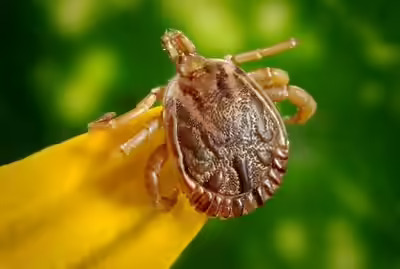
A Gulf Keralite’s impulsive decision to return home to treat a persistent fever turned out to be life-saving after he was diagnosed with scrub typhus — a potentially fatal infection that requires early treatment.
About Scrub Typhus
Scrub typhusis a bacterial infection caused by the bacterium Orientia tsutsugamushi, transmitted to humans through the bite of infected chiggers (larval mites). It is a significant cause of fever in rural parts of the Asia-Pacific region and Northern Australia.
Symptoms
Symptoms usually begin suddenly, about 6 to 21 days after the chigger bite, and can range from mild to life-threatening. Common symptoms include:
- High fever and chills
- Severe headache
- Body aches and muscle pain
- A dark, scab-like lesion (eschar) at the site of the bite, which is a key diagnostic sign, though not always present
- Rash that appears a few days after the fever, typically on the trunk and spreading to the limbs
- Swollen lymph nodes
- Gastrointestinal issues such as nausea, vomiting, and abdominal pain
- Cough and respiratory problems, which can develop into severe pneumonia or acute respiratory distress syndrome (ARDS)
- Mental changes, ranging from confusion to coma, in severe cases
The disease is maintained in a cycle involving chiggers and small mammals, particularly rodents. Humans are accidental hosts who get infected when an infected chigger bites them. The mites are found in areas with dense vegetation, such as forests, grasslands, and rural areas. The disease is not contagious and cannot spread from person to person.
Diagnosis
Diagnosing scrub typhus can be challenging as early symptoms are similar to other diseases like malaria or dengue. Diagnosis is typically based on clinical symptoms, a history of exposure to endemic areas, and confirmed by laboratory tests, such as serological tests (like indirect immunofluorescence assay (IFA) or ELISA) or molecular methods like PCR.
Treatment and Prevention
Treatment
- Scrub typhus is a curable disease if caught early. Treatment involves the use of antibiotics:
- Doxycycline is the primary antibiotic of choice for adults and children of all ages.
- Azithromycin is an effective alternative, often used for pregnant women or those who cannot tolerate doxycycline.
- Prompt treatment with antibiotics leads to rapid recovery, usually within a few days.
There is currently no vaccine available for scrub typhus, so prevention focuses on avoiding chigger bites. Key preventive measures include:
- Avoiding dense vegetation and brush in endemic areas.
- Wearing protective clothing (long sleeves, long pants tucked into socks or boots) when outdoors in risky areas.
- Using insect repellents containing DEET on exposed skin and clothing.
- Treating clothing and gear with permethrin, which kills mites.
- Maintaining a clean environment around living spaces by trimming overgrown grass.
Interstellar Comet 3I/ATLAS
About Interstellar Comet 3I/ATLAS
Comet 3I/ATLAS is the third confirmed object discovered to have originated from beyond our solar system, offering scientists a rare opportunity to study ancient material from another star system. It is currently in the constellation of Virgo and has recently passed behind the Sun from Earth's perspective.
Key Characteristics
- Origin and Trajectory: 3I/ATLAS formed in another star system, possibly in the Milky Way's thick disk, and was ejected into interstellar space billions of years ago. It is traveling on a hyperbolic trajectory, meaning it is not gravitationally bound to our Sun and will permanently leave the solar system after its brief passage. It is traveling at a very high speed, up to 68 km/s at perihelion.
- Discovery: It was discovered on July 1, 2025, by the NASA-funded Asteroid Terrestrial-impact Last Alert System (ATLAS) telescope in Chile. The "3I" in its name means the third "interstellar" object identified.
- Size and Structure: The comet has a solid, icy nucleus with an estimated diameter between 0.44 km and 5.6 km. As it approaches the Sun, it has developed a coma (a cloud of gas and dust) and a tail, which have been observed by telescopes like Hubble and the James Webb Space Telescope.
- Composition: Observations have revealed an unusual composition, including large amounts of carbon dioxide (CO₂) and atomic nickel vapor, but with minimal iron. NASA's Swift Observatory also detected hydroxyl (OH) gas, confirming the presence of water activity even at a great distance from the Sun.
- Age: The comet is estimated to be very old, potentially over seven billion years, making it older than our 4.6 billion-year-old solar system and possibly the oldest comet ever observed.
- Closest Approach to Sun: 3I/ATLAS reached its closest point to the Sun (perihelion) on October 29/30, 2025, at a distance of about 1.36 AU (Astronomical Units), just inside the orbit of Mars.
- Visibility: The comet is currently (as of early November 2025) in solar conjunction, hidden behind the Sun's glare from Earth's perspective. It is expected to reappear and become observable again to large ground-based telescopes by early December 2025. It will not be visible to the naked eye.
- Closest Approach to Earth: Its closest approach to Earth will be on December 19, 2025, at a very safe distance of approximately 1.8 AU (about 270 million kilometers or 167 million miles).
- No Threat: 3I/ATLAS poses no threat to Earth.
- Future Journey: After passing the Sun, it will pass Jupiter in March 2026 on its way out of the solar system, never to return. NASA and ESA spacecraft, including those at Mars and the Juice mission, are being used to gather data during its passage.
- The study of 3I/ATLAS offers unique insights into the chemistry and planet-forming processes of distant star systems, providing valuable comparative data to our own solar system's formation.
Centre for Research on Energy and Clean air Report
Monthly Air Quality Snapshot (October 2025)
The latest monthly report highlights a sharp deterioration in air quality across India, particularly in the National Capital Region (NCR).
- Most Polluted City: Dharuhera in Haryana was ranked as India's most polluted city in October, with a PM2.5 monthly average of 123 µg/m³, which is significantly above the national safe limit.
- NCR Dominance: All of the top 10 most polluted cities in October were located within the NCR and Indo-Gangetic Plain.
- Delhi's Ranking: Delhi was the sixth most polluted city in the country for October.
- Key Finding: The report noted that the rise in pollution levels, despite stubble burning contributing less than 6% to Delhi's PM2.5 in October, highlights the impact of year-round local emission sources and the need for long-term mitigation plans.
This report assesses the progress of India's National Clean Air Programme (NCAP).
- Widespread Exceedance: In 2024, out of 256 cities with sufficient PM2.5 data, 150 cities exceeded the National Ambient Air Quality Standards (NAAQS). All cities with monitoring data exceeded the World Health Organization's (WHO) guidelines for PM2.5.
- Most Polluted Cities (Annual Average 2024): Byrnihat (Assam), Delhi, and Gurgaon (Haryana) were the top three most polluted cities in India based on annual average PM2.5 concentrations.
- NCAP Shortcomings: The report highlighted a significant gap in the NCAP, as 100 of the 163 cities that exceeded the NAAQS are not included in the program, meaning they lack formal action plans to reduce air pollution.
- Mid-Year Air Quality Assessment for India (Jan-Jun 2024): This report found Byrnihat to be the most polluted city in the first half of 2024, with Delhi ranking third.
- Health Impacts in Delhi: An analysis of Global Burden of Disease data by CREA revealed that air pollution was linked to nearly 15% of all deaths in Delhi in 2023, exceeding deaths from high blood pressure and diabetes.
- Global Energy Transitions: Other recent reports have focused on topics such as China's declining carbon emissions, the impact of the ban on overseas coal power projects by China, and how India, China, and Indonesia are on track to peak power sector emissions before 2030 if they maintain clean energy momentum.

