CA-21/09/2025
Harmonized System of Nomenclature (HSN) Codes
Why in news?
India released a Guidebook on Mapping of (HSN) Codes, unveiled on September 20, 2025. The guidebook maps 12,167 HSN codes to 31 ministries and departments, aiming to streamline trade policies, improve domestic manufacturing, and increase policy efficiency.
Key Features of the Harmonized System
- Developed by the World Customs Organization (WCO) and implemented globally.
- Contains over 5,000 product groups identified by 6-digit codes.
- Countries can extend HSN codes beyond six digits for more detailed product classification (e.g., India uses eight digits for GST).
- Used as the basis for Customs tariffs and international trade statistics.
- Supports trade facilitation by harmonizing product classification.
- Regularly updated to reflect changes in technology and trade patterns.
- Enables automation and efficiency in taxation and customs clearance.
- Provides a uniform classification system reducing disputes and errors in trade.
- Customs officials use them to classify goods efficiently.
- Supports Free Trade Agreements (FTA) and trade compliance.
- Helps in economic analysis and market research.
- Helps governments levy appropriate taxes and duties.
- India adopted the HSN system as part of its GST regime.
- Under GST, all goods fall under specific HSN codes correlating with fixed GST rates.
- Certain turnover thresholds mandate the use of two-digit or four-digit HSN codes in invoices.
- Small taxpayers with turnover below Rs. 1.5 crore may be exempt from mentioning HSN codes
H1B visa

Why in news?
The most significant recent change to the H1B visa program is the implementation of a $100,000 one-time fee for all new H1B visa applications submitted after September 21, 2025, as mandated by a proclamation signed by US President.
Impact on India
- Over 70% of H-1B visa holders are Indian professionals, particularly in IT and engineering. The abrupt fee hike has caused panic among prospective applicants and their families.
- Indian IT service companies, startups, and tech professionals who rely on H-1B pipelines for global talent mobility and business operations will face massive added costs, potentially between $150–$550 million per year for larger firms.
- Possible consequences include fewer new Indian tech workers in the US, reduced remittances, disrupted family reunification, and a chilling effect on India-US talent flow.
- The Indian government expressed concern over the humanitarian and economic implications, with policymakers in India and the US expected to consult further.
- US tech companies—especially those hiring large numbers of foreign skilled workers—face much higher barriers to hiring Indian talent, risking reduced innovation, competitiveness, and workforce diversity.
- Smaller firms and startups are likely to suffer disproportionately, while larger companies may pass costs onto clients or reduce hiring.
- The fee is intended to encourage hiring of US workers but may also reduce the number of high-value, global-skilled professionals entering the US, impacting economic growth in Silicon Valley, research, and hospitals.
- US companies are rapidly reassessing hiring strategies and mobility plans in response.
- The H-1B visa permits U.S. employers to hire foreign workers for specialty occupations involving theoretical and practical application of specialized knowledge.
- Occupations usually require at least a bachelor's degree or its equivalent.
- The visa is employer-sponsored; the employer must file petitions with U.S. Citizenship and Immigration Services (USCIS).
- The H-1B visa is initially granted for 3 years and can be extended for up to 6 years in total.
- It has "dual intent" status, allowing holders to seek permanent residence (green card) while on H-1B.
- The annual cap is 65,000 visas.
- An additional 20,000 visas are available for individuals with a U.S. master's degree or higher.
- If the number of petitions exceeds the cap, a random lottery selects petitions for processing.
- Certain employers like universities and research institutions are exempt from the cap.
- Spouses and unmarried children under 21 of H-1B visa holders are eligible for H-4 dependent visas.
- H-4 visa holders can attend school but generally cannot work unless they obtain special employment authorization under certain conditions.
Isobutanol-Diesel blending
Why in news?
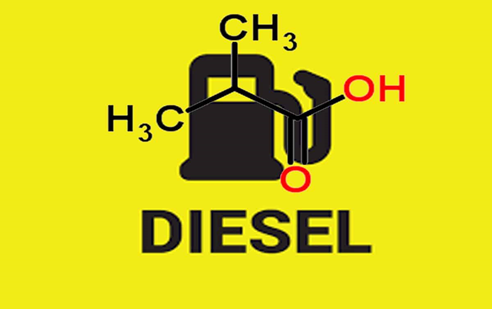
India is currently exploring the blending of isobutanol with diesel as a promising alternative after ethanol-diesel blending trials proved unsuccessful. The Automotive Research Association of India (ARAI) is conducting pilot tests with 10% isobutanol-diesel blends.
Key Properties and Advantages of Isobutanol for Diesel Blending
- Higher Flash Point: Isobutanol’s higher flash point (around 28°C) compared to ethanol makes it less volatile and safer for storage and transport.
- Better Miscibility: It blends well with diesel without needing extra additives, unlike ethanol, leading to better combustion stability.
- Energy Density: Its energy density is closer to diesel than ethanol, though still lower than pure diesel.
- Lower Hygroscopicity: Isobutanol absorbs less water, which reduces corrosion risks in engines and pipelines.
- Production: It can be produced from biomass feedstocks such as sugarcane syrup, molasses, and grains via microbial fermentation, and existing ethanol plants can be retrofitted to produce it economically.
- Emission Reduction: Blends reduce particulate matter, smoke, and harmful emissions like CO and hydrocarbons, supporting cleaner air objectives.
- Energy Security: Using domestic biomass feedstock reduces dependence on imported fossil fuels.
- Economic and Agricultural Support: Encourages use of surplus sugarcane by-products, helping farmers and managing agricultural surplus.
- Engine Compatibility: Causes fewer engine corrosion issues compared to ethanol blends, though has a lower cetane number, which can affect combustion efficiency and power.
- India is among the first countries actively piloting isobutanol-diesel blends, aiming to commercialize it and push biofuel adoption aligned with the National Biofuel Policy and net-zero emission goals by 2070.
- The government, promotes a target of 10% biofuel blending in diesel using isobutanol to improve energy security and farmer incomes.
- Blending Limit: Due to performance issues, blending is generally recommended not to exceed about 10% isobutanol in diesel to avoid combustion irregularities and engine wear.
- Ignition Delay: Studies show isobutanol blends can increase ignition delay and affect peak cylinder pressures, impacting overall engine performance.
- Miscibility with Diesel: Though better than ethanol, some miscibility issues remain, often requiring blending with biodiesel or stabilizers to maintain fuel stability.
- Engine Compatibility: Older diesel engines may face more significant performance and durability issues, requiring engine recalibration or modification for optimal use.
- Emission Concerns: While particulate matter and smoke decrease, isobutanol-diesel blends can increase nitrogen oxide (NOx) emissions due to higher combustion temperatures, necessitating emission control strategies.
- Cost and Infrastructure: Production of isobutanol is currently more expensive than diesel and ethanol. Infrastructure and additives to improve cetane readings increase operational costs.
- Feedstock Price Volatility: Fluctuating sugarcane and molasses prices affect raw material costs for isobutanol production, creating economic uncertainty.
- Scaling Up Production: While existing ethanol plants can be retrofitted, scaling up isobutanol production to commercial levels needs investment and technology adjustments.
INS Rajali
Why in news?
The Indian Navy’s Eastern Naval Command organized a two-day seminar on long-range maritime reconnaissance (LRMR) at INS Rajali, Arakkonam, in September 2025.
Key points about INS Rajali:
- INS Rajali is an Indian Naval Air Station located near Arakkonam, Tamil Nadu, about 80 km from Chennai.
- It is one of the largest and most modern naval air stations in India, with the longest military runway in Asia.
- The station was commissioned on March 11, 1992.
- Named after the "Rajali," a predatory bird native to the Tamil Nadu coastal region.
- Operates under the Eastern Naval Command of the Indian Navy.
- Home to the INAS 312 squadron, equipped with P-8I Poseidon long-range maritime reconnaissance aircraft and MQ-9B Sea Guardian drones.
Aflatoxin
Why in news?
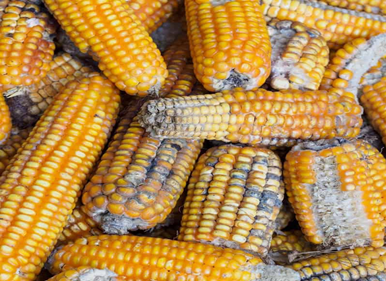
- Studies across regions report widespread aflatoxin contamination in staple crops like maize with some samples above European regulatory limits, raising food safety concerns globally.
- Indonesia suspended imports of Indian groundnuts starting September 3, 2025, due to aflatoxin contamination concerns.
- In Pakistan, a study emphasized the urgent need for aflatoxin control strategies within the livestock feed supply chain.
- Aflatoxins are toxic and carcinogenic compounds produced by certain molds, primarily Aspergillus flavus and Aspergillus parasiticus.
- Found in many crops and foodstuffs like maize, peanuts, nuts, cereals.
- Causes hepatotoxicity, cancer (especially hepatocellular carcinoma) and immune-suppression.
- Aflatoxin B1 are metabolized in the liver are the most toxic and carcinogenic.
- Exposure in animals can lead to contamination of meat, milk, and eggs.
- Children are especially vulnerable to effects like stunted growth.
- Control includes monitoring, avoiding contaminated feed, and using binders in animal feed (where allowed).
- Agricultural practices like pest control, choosing resistant crop varieties, proper irrigation, and elimination of infected crop debris to reduce fungal infection in the field.
- Postharvest practices such as thorough drying of crops before storage, sorting out moldy or damaged grains, maintaining moisture control, and preventing insect or rodent damage during storage.
- Dietary diversification and reducing consumption of high-risk foods like maize and groundnuts can also reduce exposure.
- Some biopesticides using non-toxic strains of Aspergillus competitively inhibit toxic strains.
- Community-level interventions focusing on education about drying and storage methods have shown significant reductions in aflatoxin levels in populations.
These developments reinforce ongoing risks from aflatoxin contamination affecting food security, trade, livestock health, and human public health. Efforts for control through monitoring, bio-pesticides, detoxification, and farmer education are being strongly advocated in the latest research and policy discussions.
Yellow-crested cockatoos
Features:
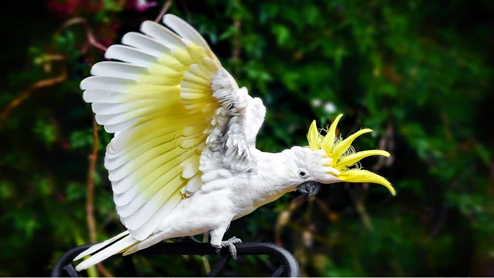
- Medium-sized cockatoo measuring about 33 to 40 cm in length.
- Mostly white plumage with bright yellow or orange erectile crest on the head.
- Has bluish-white bare skin around the eyes.
- Social bird, often found in pairs or small flocks; monogamous with pairs staying together for life.
- Native to East Timor and Indonesia (Sulawesi, Lesser Sundas).
- Inhabits evergreen, moist deciduous and semi-evergreen forests, forest edges, scrub, and cultivated agricultural lands.
- Introduced populations established in urban areas such as Hong Kong, Singapore, and China.
- Nests in tree cavities, particularly in dead or rotting trees or reused cavities made by other animals.
- Classified as Critically Endangered by the IUCN.
- Population in the wild estimated between 1,200 to 2,000 mature individuals and declining.
- Main threats: habitat loss due to logging, agriculture, palm oil plantations, and illegal trapping for the pet trade.
- Conservation efforts include habitat protection, anti-poaching actions, installation of artificial nesting boxes, and ecological monitoring.

