CA-31/08/2025
Contents
1. Adi Vaani
2. Pratibha Setu Portal
3. UDISE+ (Unified District Information System for Education Plus)
4. Exercise Bright Star
5. Guillain-Barré syndrome (GBS)
Adi Vaani
Why in news?
Ministry of Tribal Affairs has launched the Beta Version of Adi Vaani, making it the nation’s first AI-powered translator for tribal languages.
Adi Vaani is an AI-powered translation tool for India’s tribal languages, while Adi Vani Buleki is an accomplished Fijian rugby sevens player who competed in the 2024 Paris Olympics.
Beta Launch Highlights
- Developed by a consortium led by IIT Delhi, with BITS Pilani, IIIT Hyderabad, and IIIT Nava Raipur, in collaboration with Tribal Research Institutes across five states.
- Adi Vaani supports initial translations for Santali, Bhili, Mundari, and Gondi, with languages like Kui and Garo to be added in future phases.
- Features include real-time translation (text, speech), text-to-speech, speech-to-text, and OCR to digitize manuscripts and oral traditions.
- The tool aims to bridge communication gaps, empower tribal communities, and digitally preserve up to 461 tribal languages, of which 81 are vulnerable and 42 critically endangered.
- Adi Vaani is part of broader initiatives to advance Digital India, Ek Bharat Shreshtha Bharat, and government programs supporting tribal development and inclusion.
- The platform will help deliver health advisories, government scheme awareness, and subtitles for Prime Minister’s speeches in tribal languages.
- Its community-driven approach involves local data collection and validation to ensure accuracy and cultural integrity.
- Adi Vaani represents a major step in empowering India's tribal communities through technology and the preservation of endangered languages.
Pratibha Setu Portal
Why in news?
Recently the Pratibha Setu Portal was officially launched and discussed by Prime Minister Narendra Modi in his 125th "Mann Ki Baat" address on August 31, 2025
About
The Pratibha Setu Portal is an official UPSC initiative to connect employers with highly qualified candidates who cleared all stages of major UPSC exams, but were not recommended in the final merit list.
Purpose and Background
- Pratibha Setu, also called the "Professional Resource and Talent Integration Bridge for Hiring Aspirants," was launched to address the issue that thousands of talented aspirants clear tough UPSC exams but lose out due to limited vacancies.
- This platform builds on the earlier Public Disclosure Scheme and formalizes the process, creating a digital ecosystem for career enablement beyond civil services.
- Eligibility: Aspirants who clear all exam stages but miss final selection in CSE, Engineering, Forest Service, CMS, CAPF, CDS, IES/ISS, and Geo-Scientist exams can voluntarily opt-in.
- Employer Access: Registered employers (ministries, PSUs, private companies, academic bodies) receive credentials to browse candidate profiles securely.
- Features: The portal offers advanced search by discipline, lets employers shortlist candidates and provides candidate biodata including education details, marks, and contact info. Only opt-in candidates’ data is shared, safeguarding privacy.
- Process: Employers contact shortlisted candidates directly for interviews or recruitment. The portal enables a "second gateway" for deserving UPSC aspirants to find impactful roles.
- Bridges the gap between high merit and employment opportunities, helping over 10,000 qualified candidates access roles in governance, policy, research, and corporate sectors.
- Promotes transparency and ethical use of candidate information, with all participation voluntary.
- Strengthens national capacity by delivering a pre-assessed talent pool to organizations.
UDISE+
(Unified District Information System for Education Plus)
(Unified District Information System for Education Plus)
Why in news?
The latest news about UDISE Plus centers on the Ministry of Education’s release of comprehensive school data for the 2024–25 academic year, highlighting major progress in teacher strength, enrolment, retention, and infrastructure in Indian schools.
About UDISE+
- UDISE+ (Unified District Information System for Education Plus) is the official educational management information system of the Ministry of Education, designed for systematic collection and reporting of school-level data nationwide.
- The system is managed by the Department of School Education & Literacy, Ministry of Education, and supported technically by the National Informatics Centre.
- School Profile: Records infrastructure, facilities, and services available in each school.
- Student Module: Maintains the academic, demographic, and extracurricular data of every student using a Permanent Education Number.
- Teacher Module: Tracks details of all teaching and non-teaching staff.
- GIS-based Applications: Mobile apps such as UDISE+ GIS Capture gather geolocation and images of schools for better planning and navigation.
- Know Your School App: Offers public access to school details, increasing transparency and aiding parent and stakeholder decision-making.
- Teacher Strength: The number of teachers crossed 1 crore for the first time, registering a 6.7% increase over 2022–23, with improved regional balance and quality focus.
- Pupil-Teacher Ratios: PTRs are reported at 10 (foundational), 13 (preparatory), 17 (middle), and 21 (secondary) levels—significantly better than NEP’s recommended 1:30 ratio.
- Drop-out and Retention Rates: Drop-out rates have dipped to record lows—2.3% (preparatory), 3.5% (middle), and 8.2% (secondary). Retention rates are high, with nearly 99% at the foundational level.
- Gross Enrolment Ratio (GER): GER is up to 90.3% at the middle level and 68.5% in secondary schools, indicating more students are staying enrolled through higher grades.
- Transition Rates: Student transition rates between key education stages are now above 98% at foundational, 92% at preparatory, and 86% from middle to secondary level.
- Zero Enrolment & Single Teacher Schools: Single-teacher schools have reduced to approximately 1 lakh; zero-enrolment schools dropped 38% to below 8,000, showing better coverage and resource allocation.
- School Infrastructure: Notable improvements: 64.7% schools with computers, 63.5% with internet, 93.6% with electricity, 99.3% with drinking water, and almost all with gender-segregated toilets.
- Gender Representation: Girls’ enrolment rose to 48.3%, and women teachers now constitute 54.2% of the workforce.
- UDISE Plus has fully adopted individual student-wise data collection, aligning with National Education Policy (NEP) 2020 for more targeted analysis and policy support.
- Real-time data capture and cross-linked Aadhaar IDs have enhanced accuracy, removed duplication, and driven improved resource planning.
- These findings confirm that UDISE Plus remains central to evidence-based education policymaking, supporting interventions and reforms that drive inclusivity and quality in Indian school education.
Exercise Bright Star
Why in news?
Exercise Bright Star is a major multilateral military drill hosted by Egypt in partnership with the United States, with its 19th edition taking place from August 28 to September 10, 2025 and involving over 700 personnel from the Indian Army, Navy, Air Force, and Headquarters Integrated Defence Staff.
Overview and History
- Exercise Bright Star originated in 1980 as a bilateral US-Egypt initiative and has grown to be one of the largest and longest-running tri-service drills in the Middle East–North Africa (MENA) region.
- Held biennially, it now involves up to 43 nations, with 13 sending troops and 30 acting as observers in 2025.
- The exercise’s roots trace back to fostering regional cooperation and interoperability among friendly nations.
- Live Firing Exercises: All three Indian services (Army, Navy, Air Force) will showcase their operational capabilities through land, air, and sea demonstrations.
- Command Post Exercises (CPX): These focus on sharpening joint planning, decision-making, and operational coordination in a multinational environment.
- Short Training Modules: Training includes modern warfare, cyber operations, joint logistics, and operational tactics.
- Subject Matter Expert Interactions: Knowledge exchange on domains including cyber warfare, logistics, and strategic communications promotes cutting-edge practices.
- For India: Participation underlines India’s commitment to regional peace and stability, strengthens tri-service synergy, and enhances jointness and interoperability with other nations.
- Defence Diplomacy: Bright Star provides a platform for promoting defence cooperation and multilateral partnerships, demonstrating India’s growing global military role and professionalism.
- Regional Security: The exercise builds capacity for coalition operations (including peacekeeping) and supports India’s SAGAR (Security and Growth for All in the Region) vision.
- The 2025 edition sees over 7,900 troops from 43 countries taking part, emphasizing its significance and scale in multinational military collaboration.
- Key participants besides host Egypt and the United States include India, Saudi Arabia, Greece, France, Germany, Italy, Jordan, UAE, and more.
Exercise Bright Star is a landmark event in global military cooperation, enhancing India’s operational readiness and international defence partnerships while fostering peace and stability in the MENA region.
Guillain-Barré syndrome (GBS)
Why in news?
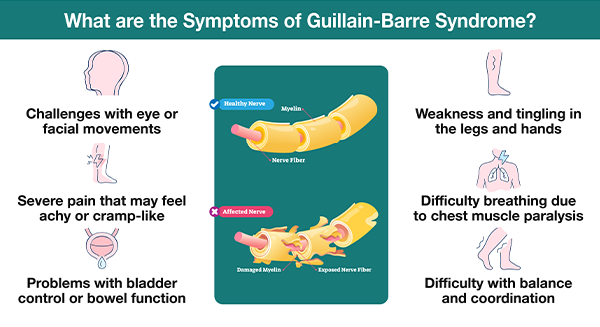
Guillain-Barré syndrome (GBS) is a rare, serious autoimmune disorder in which the body’s immune system mistakenly attacks the peripheral nerves, leading to rapid muscle weakness and sensory changes that often begin in the legs and may spread to the arms and face.
Key Features
- Autoimmune origin: GBS typically develops after an infection or, less commonly, surgery or vaccination, when immune cells mistakenly target nerve fibers and damage their myelin insulation.
- Rapid onset: Symptoms usually start with tingling and weakness, beginning in the feet or legs, then progressively affecting the upper body, face, and sometimes the muscles that control breathing.
- Potential for paralysis: Severe cases may cause paralysis and require mechanical ventilation if breathing muscles are affected; hospital treatment and intensive support are often required.
- Variability: The spectrum ranges from mild weakness to nearly complete paralysis, but most people recover, although some may continue to have residual weakness or neurological issues.
- Pins and needles sensation (paresthesia) in fingers, toes, or limbs.
- Progressive muscle weakness, usually symmetric and starting in the lower body.
- Difficulty walking, climbing stairs, or unsteady gait.
- Facial muscle weakness, trouble speaking, chewing, or swallowing.
- Severe pain, often in the back or legs; may worsen at night.
- Breathing difficulties (life-threatening in severe cases).
- Blood pressure and heart rate abnormalities (autonomic dysfunction).
- Double vision or trouble moving the eyes.
- Bladder and bowel control issues (rare).
- Acute inflammatory demyelinating polyradiculoneuropathy (AIDP): Most common in Western countries; weakness starts in lower body and ascends.
- Miller Fisher syndrome (MFS): Paralysis starts in the eyes, often more common in Asia.
- Acute motor axonal neuropathy (AMAN) and acute motor-sensory axonal neuropathy (AMSAN): More frequent in certain countries like China and Japan.
- Supportive care, including intensive hospital treatment for severe cases.
- Specific therapies include intravenous immunoglobulins (IVIg) and plasma exchange.
- Most recover, though some may have lasting weakness; about 5–7% mortality rate.
- Occurs in about 1–2 cases per 100,000 people annually, affecting both children and adults of all ages, but more common in adults and males.
- May be triggered by respiratory or gastrointestinal infections, especially Campylobacter jejuni.
Download Pdf

