CA-21/08/2025
Contents
1. Agni-5
2. Constitution (130th Amendment) Bill, 2025
3. Online Gaming Bill 2025
Why in news?
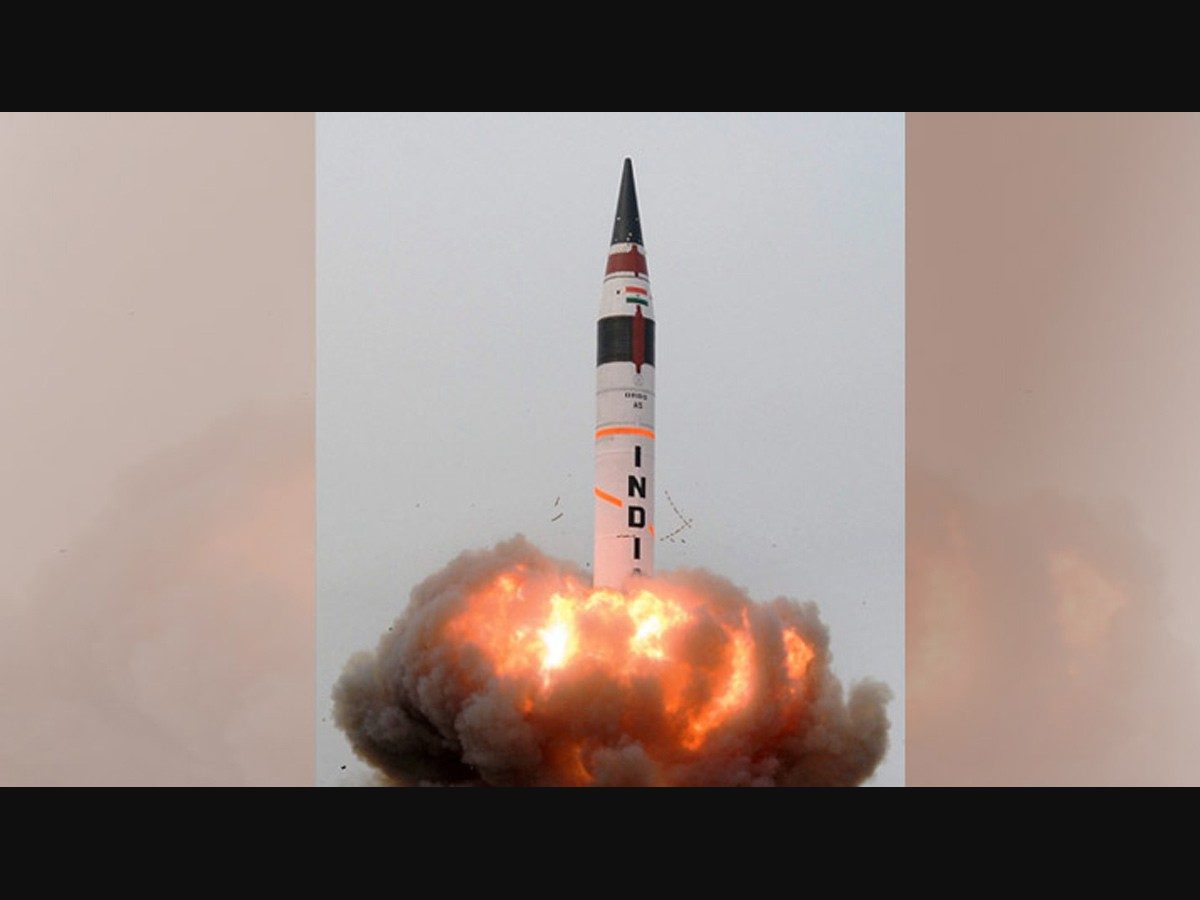
India successfully conducted the latest test-fire of its most advanced nuclear-capable intermediate-range ballistic missile, Agni-5, on August 20, 2025. The launch took place from the Integrated Test Range at Chandipur, Odisha, under the Strategic Forces Command's supervision.
About Agni-5 Missile
The Agni-5 missile is an indigenously developed Indian intermediate-range ballistic missile (IRBM) designed primarily for nuclear deterrence.
Here are the key details about Agni-5:
- Range: Over 5,000 kilometers, with ongoing development potentially extending it up to 7,500 kilometers. This allows it to cover almost the entire Asian continent, including northern China, and parts of Europe.
- Stages: Three-stage solid-fueled missile featuring a composite motor casing for the second and third stages to reduce weight.
- Launch System: Road-mobile, canister-launched, enhancing mobility, storage, and rapid deployment capabilities.
- Payload: Capable of carrying nuclear warheads, including Multiple Independently Targetable Reentry Vehicles (MIRVs), allowing multiple warheads to be targeted independently in a single launch.
- Navigation and Guidance: Incorporates advanced ring laser gyroscope inertial navigation, accelerometer, satellite navigation (India’s NavIC and GPS), and thrust vector control for high accuracy.
- Design Features: Use of light composite materials for weight reduction, improved avionics, re-entry heat shielding, and enhanced precision.
- Strategic Role: Key component of India’s nuclear deterrence, especially against China and for credible second-strike capability, aligning with India’s “No First Use” nuclear doctrine.
- Operational Status: The missile has undergone multiple successful test firings, with the latest conducted in August 2025 confirming its readiness and MIRV capability.
- Historical Note: Agni-5 was developed to extend India’s missile reach beyond the 4,000 km range of Agni-IV, to cover strategic targets much deeper into China and beyond.
Ballistic Missile
- A ballistic missile is a type of missile that delivers warheads to a target by following a ballistic trajectory, which is largely determined by gravity.
- These missiles are powered only during an initial "boost" phase when rocket engines propel them upward and give them velocity.
- After this powered phase, the missile follows an unpowered, curved flight path outside or within the atmosphere before re-entering and descending rapidly toward the target at hypersonic speeds.
- Ballistic missiles differ from cruise missiles, which are continuously powered and guided through the atmosphere. Ballistic missiles can be launched from land-based silos, mobile launchers, ships, submarines, and aircraft.
- Tactical Ballistic Missiles (TBM): less than 300 km
- Short-Range Ballistic Missiles (SRBM): 300 to 1,000 km
- Medium-Range Ballistic Missiles (MRBM): 1,000 to 3,500 km
- Intermediate-Range Ballistic Missiles (IRBM): 3,500 to 5,500 km
- Intercontinental Ballistic Missiles (ICBM): greater than 5,500 km
- Boost Phase: Powered flight where the missile is propelled upwards.
- Midcourse Phase: Unpowered flight along a ballistic trajectory, sometimes through space.
- Terminal Phase: Re-entry and rapid descent towards the target, where it may travel at hypersonic speeds.
Agni-5 Missile FAQs
Agni-5 and Ballistic Missile Technology**
1. Which of the following best describes the propulsion and structural design features of the Agni-5 missile?
A) Two-stage liquid-fueled missile with steel motor casing and fixed launch platform
B) Three-stage solid-fueled missile with composite motor casing for the second and third stages and road-mobile canister launch system
C) Single-stage solid-fueled missile with aluminum motor casing and silo-based launch only
D) Four-stage hybrid-fueled missile with titanium motor casing and exclusively submarine launch capability
2. The Agni-5 missile's navigation system includes multiple technologies. Which combination below correctly lists its navigation and guidance features?
A) Ring laser gyroscope inertial navigation, accelerometer, satellite navigation (NavIC and GPS), thrust vector control
B) GPS-only navigation with traditional mechanical gyroscope and aerodynamic steering
C) Star-tracking inertial navigation with manual guidance and radar homing
D) Magnetic compass guidance combined with ground-based radar corrections
3. What strategic advantage does the Agni-5 missile primarily provide to India in terms of its nuclear doctrine?
A) Enables first-strike capability against neighboring countries
B) Provides credible second-strike capability aligned with India's "No First Use" nuclear doctrine
C) Acts as a tactical battlefield missile for short-range engagements
D) Serves as a conventional-only missile system without nuclear payloads
4. How does the classification of ballistic missiles define the Agni-5 missile based on its range?
A) Short-Range Ballistic Missile (SRBM) with range up to 1,000 km
B) Medium-Range Ballistic Missile (MRBM) with range between 1,000 to 3,500 km
C) Intermediate-Range Ballistic Missile (IRBM) with range over 5,000 km, potentially extending to 7,500 km
D) Intercontinental Ballistic Missile (ICBM) with range below 5,500 km
5. Which of the following correctly sequences the flight phases of a ballistic missile like Agni-5?
A) Terminal Phase → Midcourse Phase → Boost Phase
B) Boost Phase → Terminal Phase → Midcourse Phase
C) Midcourse Phase → Boost Phase → Terminal Phase
D) Boost Phase → Midcourse Phase → Terminal Phase
Constitution (130th Amendment) Bill, 2025
Why in news?
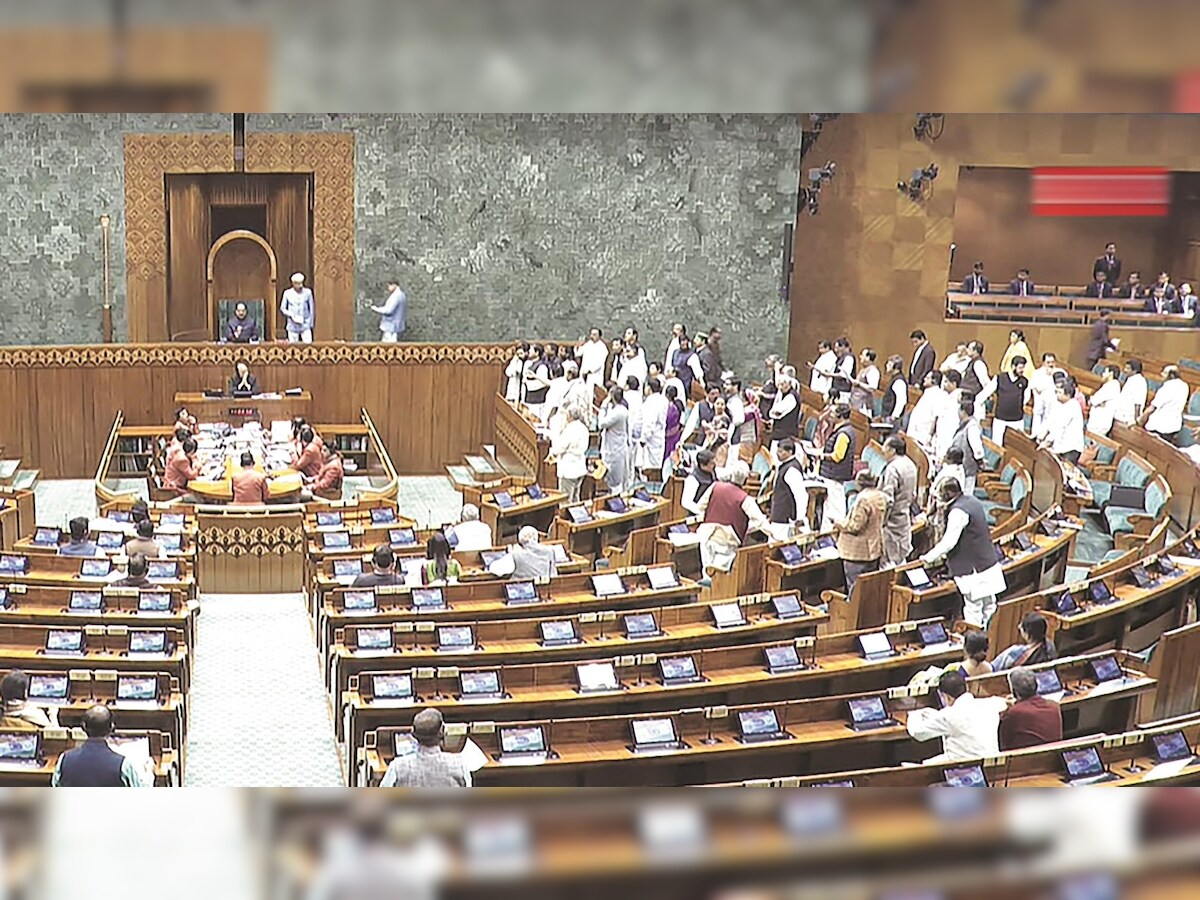
The Constitution (130th Amendment) Bill, 2025, was introduced in the Lok Sabha by Union Home Minister Amit Shah in August 2025.
Key Provisions:
- A minister will be removed if accused of a serious offence (punishable with imprisonment of 5 years or more) and detained for 30 consecutive days without bail.
- At the central government level, the President will remove the minister on the advice of the Prime Minister by the 31st day of custody. If the Prime Minister does not advise removal, the minister automatically ceases to hold office from the 31st day.
- At the state level, the Governor acts on the advice of the Chief Minister similarly.
- In Union Territory Delhi, the President acts on the advice of the Chief Minister.
- Prime Minister or Chief Ministers must resign by the 31st day of detention or cease to hold office automatically thereafter.
- A minister removed under these provisions can be re-appointed once released from custody.
- To prevent ministers from running governments while in jail and uphold moral integrity in public office.
- This amendment extends the removal provisions to important offices like the Prime Minister and Chief Ministers, setting a higher moral standard.
- It aligns with provisions in the Representation of People Act that disqualify elected representatives sentenced to imprisonment of two years or more.
- The government argues this is necessary as previously some ministers continued in their roles despite being detained.
- Bail granted within 30 days will prevent removal, allowing time for genuine cases to be distinguished from false ones.
- He noted courts retain the authority to grant bail and intervene appropriately, ensuring speedy justice.
- The Bill needs a two-thirds majority to pass and has been referred to a Joint Parliamentary Committee for further examination.
- Critics argue the Bill undermines the presumption of innocence by removing ministers before conviction.
- There are concerns of potential political misuse, with executive discretion to remove ministers possibly being exploited.
- Disproportionate focus on ministers while legislators with criminal cases remain unaffected raises fairness and consistency issues.
- The Bill raises constitutional questions about separation of powers and democratic rights of elected officials.
- Debates are ongoing about balancing moral governance with legal rights and democratic norms.
Constitution (130th Amendment) Bill, 2025,FAQ?
1. Which Articles of the Indian Constitution are proposed to be amended by the Constitution (130th Amendment) Bill, 2025?
A) Articles 74, 162, and 243
B) Articles 75, 164, and 239AA
C) Articles 80, 165, and 356
D) Articles 51, 153, and 370
2. Under the 130th Amendment Bill, what is the minimum duration of consecutive detention on serious criminal charges that triggers automatic removal of a Minister?
A) 15 days
B) 21 days
C) 30 days
D) 45 days
3. How does the Bill propose the removal of a Chief Minister (CM) of a State upon 30 days of detention on serious criminal charges?
A) The President removes the CM on advice of the Prime Minister
B) The Governor removes the CM directly without advice
C) The Lieutenant Governor removes the CM on advice of the Chief Minister
D) The Supreme Court orders removal after judicial review
4. What is a primary constitutional gap that the 130th Amendment Bill seeks to address?
A) Lack of provision for impeachment of the Prime Minister
B) Absence of explicit constitutional mechanism for removal of Ministers detained on serious criminal charges
C) No procedure for removal of Ministers convicted under electoral laws
D) Ineffective appointment process for Governors and Lieutenant Governors
5. Which of the following is a key criticism raised against the Constitution (130th Amendment) Bill, 2025?
A) It fails to include Union Territory ministers under its scope
B) It allows removal based on allegations without requiring conviction, threatening presumption of innocence
C) It removes the power of the President to remove Union Ministers
D) It excludes the requirement of state ratification for constitutional amendment
Online Gaming Bill 2025

Why in news?
The Online Gaming Bill 2025, officially known as the Promotion and Regulation of Online Gaming Bill 2025, was passed by the Indian Parliament.
Key aspects of the Bill include:
Ban on Real Money Games
- A complete ban is imposed on all online games involving monetary stakes or financial returns, including fantasy sports, rummy, poker, and other similar real-money platforms.
- This ban removes the longstanding "skill versus chance" debate by fully prohibiting money games.
- Offshore operators accessible in India are also targeted through extraterritorial enforcement powers.
- Financial institutions such as banks, NBFCs, wallets, UPI systems, and payment gateways are barred from processing deposits or withdrawals for these games.
- Violations can lead to severe penalties: up to 3 years imprisonment and ?1 crore fine for offering money games; up to 2 years imprisonment and ?50 lakh fine for advertising violations; repeat offences attract 3-5 years imprisonment and up to ?2 crore fines. Arrests can be made without warrant, and raids can be conducted on physical and digital premises.
- Establishment of a national-level Online Gaming Authority to oversee licensing, categorization, compliance enforcement, and consumer protection.
- Powers to block online platforms violating the rules under IT laws.
- Strict controls on advertisements and financial transactions related to banned games.
- The RMG sector of the online gaming market valued at $3.2 billion, which was 85% of the total gaming market, faces complete elimination under this Bill.
- The total online gaming market in India was $3.7 billion for FY24, with projected growth at risk.
- Significant job losses (estimated 2-3 lakh people) are expected in the RMG segment.
- The e-sports and social gaming segments are expected to benefit from government support and promotion.
Significance for India’s Digital Future
- The Bill aims to strike a balance between rapid technological growth and safeguarding public interests by banning harmful real-money gaming while fostering innovation in e-sports and social gaming.
- It reflects a strategic push for India to become a leader in digital gaming innovation, creatively leveraging technology for economic and cultural growth.
- Preventing misuse of gaming platforms for illegal activities such as money laundering and terrorism financing addresses serious national security concerns.
- The emphasis on structured growth for e-sports and digital education-related gaming aligns with India's broader digital economy goals, boosting employment and global competitiveness in technology-driven sectors.
- While the Bill may cause short-term disruption in the real money gaming market and associated jobs, it positions India to support a responsible gaming ecosystem with long-term sustainable growth focused on skill, creativity, and entertainment.
- The Bill establishes a comprehensive ban on online real money gaming (money games) in India, including betting, gambling, and any games involving monetary stakes or financial returns. This eliminates about $3.2 billion of the market which was predominantly based on real money gaming, to address social, financial, and psychological harms, including addiction, financial distress, fraud, and potential terror financing risks.
1. Which of the following is NOT a provision included in the Online Gaming Bill 2025 regarding real money games (RMG)?
A) Complete ban on all online games involving monetary stakes including fantasy sports and poker
B) Financial institutions are prohibited from processing deposits or withdrawals for banned games
C) Legalization of offshore operators providing RMG services to Indian users under strict licensing
D) Severe penalties including imprisonment and fines for violations related to money games
2. How does the Online Gaming Bill 2025 address the "skill versus chance" debate traditionally associated with real money games?
A) By permitting games based solely on skill but banning chance-based games
B) By fully prohibiting all real money games regardless of skill or chance elements
C) By allowing chance-based games but banning skill-based games involving money
D) By deferring the decision to state governments for regulation
3. What is the role of the newly established Online Gaming Authority under the Bill?
A) To promote offshore gaming platforms and facilitate their entry into India
B) To oversee licensing, game categorization, compliance enforcement, and consumer protection
C) To operate all government-run online gaming platforms exclusively
D) To subsidize real money gaming companies transitioning to social games
4. Which of the following best describes the Bill’s approach toward e-sports and online social games?
A) They are banned along with real money games due to addiction concerns
B) They are promoted as legitimate, skill-based competitive sports and safe recreational activities without monetary stakes
C) They are allowed only if they integrate real money betting mechanisms under government supervision
D) They are treated as entertainment but excluded from any government support or regulation
5. What is a significant expected impact of the Online Gaming Bill 2025 on India’s gaming market and employment?
A) Growth in the real money gaming sector due to stricter regulations
B) Loss of approximately 2-3 lakh jobs in the RMG sector but increased opportunities in e-sports and social gaming
C) Complete replacement of social games by real money gaming platforms
D) Immediate growth in offshore operators’ market share within India
Download Pdf

