CA-20-08-2025
Contents
1. Naegleria fowleri
2. Saltwater crocodiles
3. Anna Chakra
4. Asian Palm Civet
5. Pamba River Latest News
6. Thattekad Bird Sanctuary
1. Naegleria fowleri
2. Saltwater crocodiles
3. Anna Chakra
4. Asian Palm Civet
5. Pamba River Latest News
6. Thattekad Bird Sanctuary
Naegleria fowleri
Why in news?
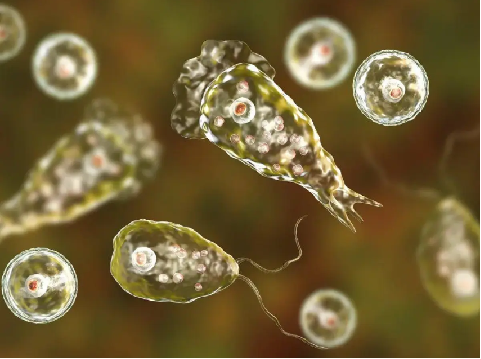
Health officials in Kerala have detected the presence of Naegleria fowleri, the amoeba that causes primary amoebic meningoencephalitis (PAM), a rare brain infection.
About
- Naegleria fowleri is a free-living, single-celled organism commonly known as the brain-eating amoeba.
- It thrives in warm freshwater environments such as lakes, rivers, hot springs, and sometimes in poorly maintained swimming pools and domestic water supplies.
- This amoeba does not require a host to survive and typically feeds on bacteria; however, it can become pathogenic in humans.
- Infection occurs when contaminated water enters the nose—most often during swimming or diving in warm freshwater. Once in the nasal cavity, Naegleria fowleri migrates along the olfactory nerve to the brain, causing a highly fatal condition called Primary Amoebic Meningoencephalitis (PAM).
- Swallowing contaminated water does not cause infection; only nasal exposure does.
- Early symptoms of PAM include headache, fever, nausea, and vomiting.
- The infection progresses rapidly, leading to stiff neck, confusion, loss of balance, hallucinations, and ultimately coma and death—usually within 1–18 days after symptom onset.
- The disease is almost always fatal; in the U.S. between 1962 and 2024, only four out of 167 reported cases survived.
- Forms: Exists as cysts (dormant), trophozoites (feeding), and biflagellates (motile).
- Habitat: Warm water with abundant bacteria, soil, and locations with human disturbance or contaminated tap water.
- Thermophilic: Can survive and multiply at elevated temperatures up to 45°C.
- Do not swim or dive in warm, untreated freshwater.
- Minimize water going up the nose.
- Use properly maintained swimming pools/chlorinated water.
- Only use sterile or distilled water for nasal rinsing devices.
While Naegleria fowleri is rare, its infection is deadly and swift. Preventive measures are important when dealing with warm freshwater activities or nasal rinsing practices.
Saltwater crocodiles
Why in new?
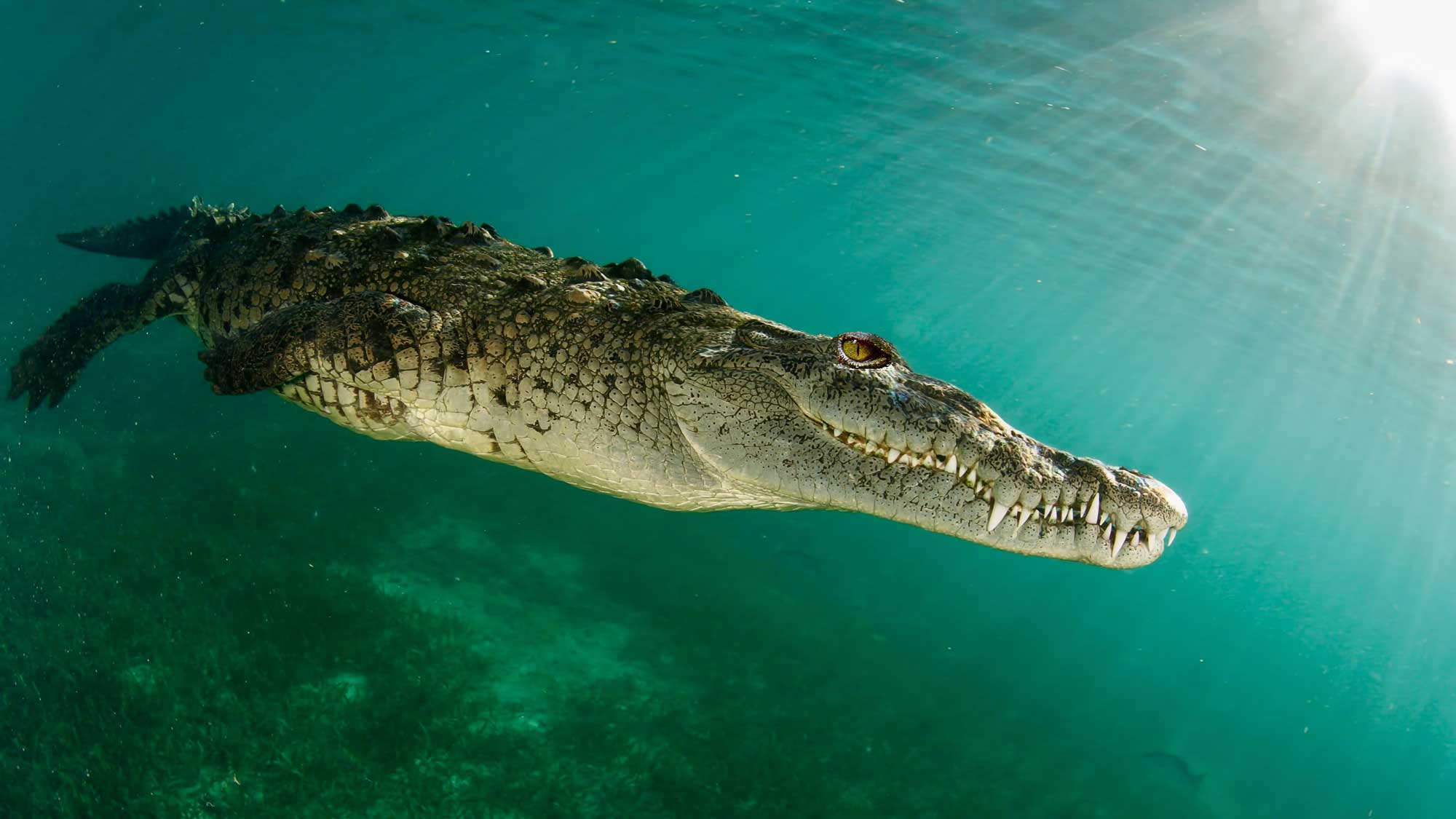
The latest census reports the population of saltwater crocodiles in the Sundarbans, West Bengal, has shown steady growth.
The reports estimate a population between 220 and 242 individuals—up from 204 to 234 in the previous year.
About saltwater crocodile
- The saltwater crocodile (Crocodylus porosus), also called the estuarine crocodile, Indo-Pacific crocodile, or simply "saltie," is the largest living reptile and one of the world's most formidable predators.
- Adult males can grow up to 6–7m (20–23ft) in length and weigh as much as 1,000–1,500kg .
- Saltwater crocodiles are found in coastal regions from India's east coast across Southeast Asia, the Sundaland, northern Australia, and as far as Micronesia.
- They inhabit saltwater habitats, brackish wetlands, and freshwater rivers, displaying a unique ability to thrive in seawater through specialized salt glands found on their tongues.
- Largest living reptile and the most massive terrestrial predator.
- Known for their aggressive and territorial nature,.
- Exceptional swimmers, they can often move hundreds of kilometers along coastlines.
- Life expectancy can exceed 70 years.
- Their populations are listed as Least Concern on the IUCN Red List.
- Saltwater crocodiles are regarded as highly dangerous to humans due to their size, power, and unpredictable behaviors.
Habitat Loss & Encroachment
- River bank encroachment, development, and agricultural expansion have reduced suitable basking, nesting, and foraging habitats.
- Degradation of mangrove and wetland ecosystems crucial for saltwater crocodiles remains a critical threat.
- Increased crocodile populations, especially in areas like Bhitarkanika and the Sundarbans, has led to more frequent interactions with humans.
- Crocodiles are targeted for their skin, meat, and alleged medicinal properties. Although once a major threat, poaching persists in some regions despite wildlife protection laws.
- Pollution, alteration of river flows, and erosion continue to impact important crocodile habitats. Sustainable management of river systems and estuaries is required for long-term survival.
- Annual censuses and ongoing monitoring of populations.
- Barricades at river ghats to minimize human-crocodile interactions.
- Discontinuation of breeding programs in regions (e.g., Bhitarkanika) where population saturation is reached.
- Continued efforts in habitat protection, community engagement, public education, and enforcement of conservation laws are critical for the future success of saltwater crocodile conservation in India.
Anna Chakra
About
- Anna Chakra is a Public Distribution System (PDS) supply chain optimization tool launched by the Ministry of Consumer Affairs, Food and Public Distribution in India.
- It is developed in collaboration with the World Food Programme (WFP) and the Foundation for Innovation and Technology Transfer (FITT) at IIT Delhi.
- The tool employs advanced algorithms to identify optimal routes for the transportation of food grains in the PDS logistics network to ensure seamless and efficient movement of food grains across supply chain nodes.
- Route Optimization: Uses advanced algorithms to identify the most efficient routes for transporting food grains, minimizing transportation time, fuel consumption, and costs.
- Integration with Railways and Logistics Platforms: Integrated with the Railways' Freight Operations Information System (FOIS) and the PM Gati Shakti platform, which maps geo-locations of Fair Price Shops (FPS) and warehouses to enable better logistics coordination.
- Wide Coverage: Optimizes routes covering 30 states, approximately 4.37 lakh Fair Price Shops, and about 6,700 warehouses.
- Environmental Benefits: By reducing transportation distances by 15-50%, it lowers transportation-related carbon emissions, contributing to sustainable development.
- Technology-Driven: Employs Operations Research and Artificial Intelligence techniques to automate and improve the supply chain decision-making process.
- Collaborative Development: Developed in collaboration with the World Food Programme (WFP) and the Foundation for Innovation and Technology Transfer (FITT) at IIT Delhi.
- Enhance Efficiency: Speed up and make the movement of food grains more reliable and timely within the PDS network.
- Cost Savings: Save an estimated Rs. 250 crore annually by reducing logistics and transportation costs.
- Reduce Leakages: Improve transparency and reduce leakages in the supply chain by optimizing delivery routes.
- Support Food Security: Strengthen India’s food security program benefiting over 81 crore people under the National Food Security Act.
- Environmental Sustainability: Reduce the carbon footprint of the PDS logistics by minimizing fuel consumption and emission from transport vehicles.
- Modernize PDS: Using technology to modernize and reform the PDS system for better fund utilization and service delivery.
Asian Palm Civet
Why in news?
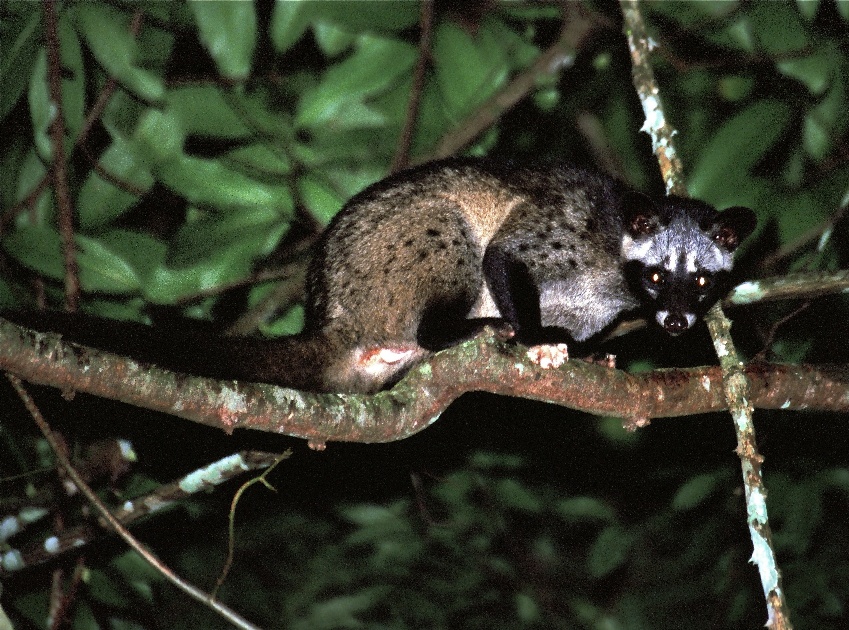
Recent In Kerala, the High Court proceedings were disrupted due to a foul stench caused by an Asian Palm Civet that apparently got into the court premises.
About Asian Palm Civet
- The Asian palm civet (scientific name: Paradoxurus hermaphroditus), also known as the common palm civet, toddy cat, or musang, is a small mammal native to South and Southeast Asia.
- It belongs to the viverrid family. It has a long, stocky body covered with coarse, shaggy greyish hair, distinct black markings, and a long tail that is black-tipped but not ringed.
- Its size is about 53 cm in body length with a 48 cm tail, and it weighs between 2 to 5 kg.
- The species has anal scent glands that produce a strong secretion used for defense and communication.
- This civet is widely distributed across many countries in south asia.
- Interesting facts include that the civet is hunted for illegal wildlife trade, is IUCN-listed as Least Concern, and its defecation habit of passing coffee seeds intact is the basis for the rare and expensive "civet coffee" (kopi luwak).
It is classified as ‘Least Concern’ under the IUCN Red List
Pamba River Latest News
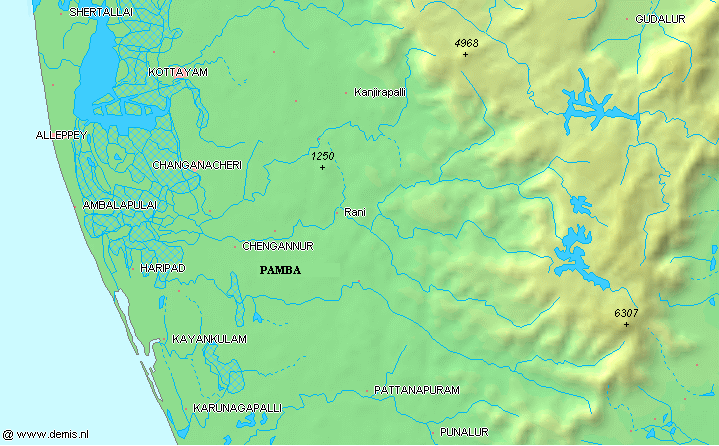
Recent news about the Pamba River as of August 2025:
- The central government is taking steps to include the Pamba River under the National River Conservation Plan (NRCP), which is a multi-crore initiative aimed at protecting major rivers across India. .
- Kerala has recently experienced heavy rains causing the authorities to issue warnings for rising water levels in rivers including the Pamba. The Kakki-Anathode dam, which feeds the Pamba River, released water due to inflow from the heavy rains.
- The river is highly polluted due to sewage discharge from nearby areas, including from illegal constructions along the riverbanks.
- It is sacred due to its association with the Sabarimala temple, where pilgrims bathe in the river before and after their trek.
- The Pamba River, also known as the Pampa River, is the third longest river in the Indian state of Kerala, after the Periyar and Bharathappuzha rivers.
- It is the longest river in the former princely state of Travancore.
- The river originates at Pulachimalai Hill in the Peerumedu Plateau of the Western Ghats at an altitude of 1,650 meters (5,410 feet) in Idukki district.
- The Pamba River flows for about 176 kilometers through the districts of Pathanamthitta, and Alappuzha, before draining into the Vembanad Lake, eventually reaching the Arabian Sea.
- Its basin covers an area of 2,235 square kilometers within Kerala. The river nourishes fertile agricultural areas like Kuttanad, known for rice cultivation, and supports a rich cultural and religious heritage in the region.
- The river is often referred to as the "Dakshina Bhageerathi" or southern Ganga due to its sacred status.
- Environmental concerns exist due to pollution from agricultural runoff, rituals, and sand mining, which threaten the river's health despite ongoing conservation efforts.
Thattekad Bird Sanctuary
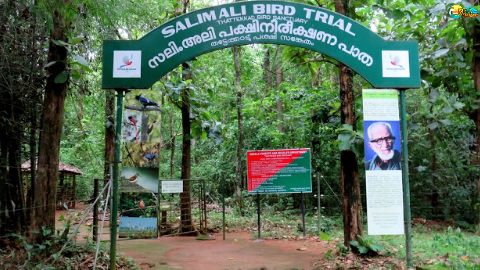
- The latest news on Thattekad Bird Sanctuary highlights a recent comprehensive faunal survey conducted there, which added nine new species records to its official biodiversity checklist.
- Thattekad, also known as Dr. Salim Ali Bird Sanctuary, is Kerala’s first bird sanctuary located on the banks of the Periyar River, spreading across the foothills of the Western Ghats.
- It features tropical evergreen, semi-evergreen, and moist deciduous forests and is renowned for its rich bird diversity with over 280 species recorded, including many rare and endemic birds such as the Ceylon Frogmouth, Black Bazza, and Oriental Dwarf Kingfisher.
- Tourism and birdwatching are flourishing there, with Thattekad being a top destination for bird enthusiasts due to its natural habitats, trails, watchtowers, and guided tours.
Download Pdf

