Saltwater crocodiles
Why in new?
The latest census reports the population of saltwater crocodiles in the Sundarbans, West Bengal, has shown steady growth.
The reports estimate a population between 220 and 242 individuals—up from 204 to 234 in the previous year.
About saltwater crocodile
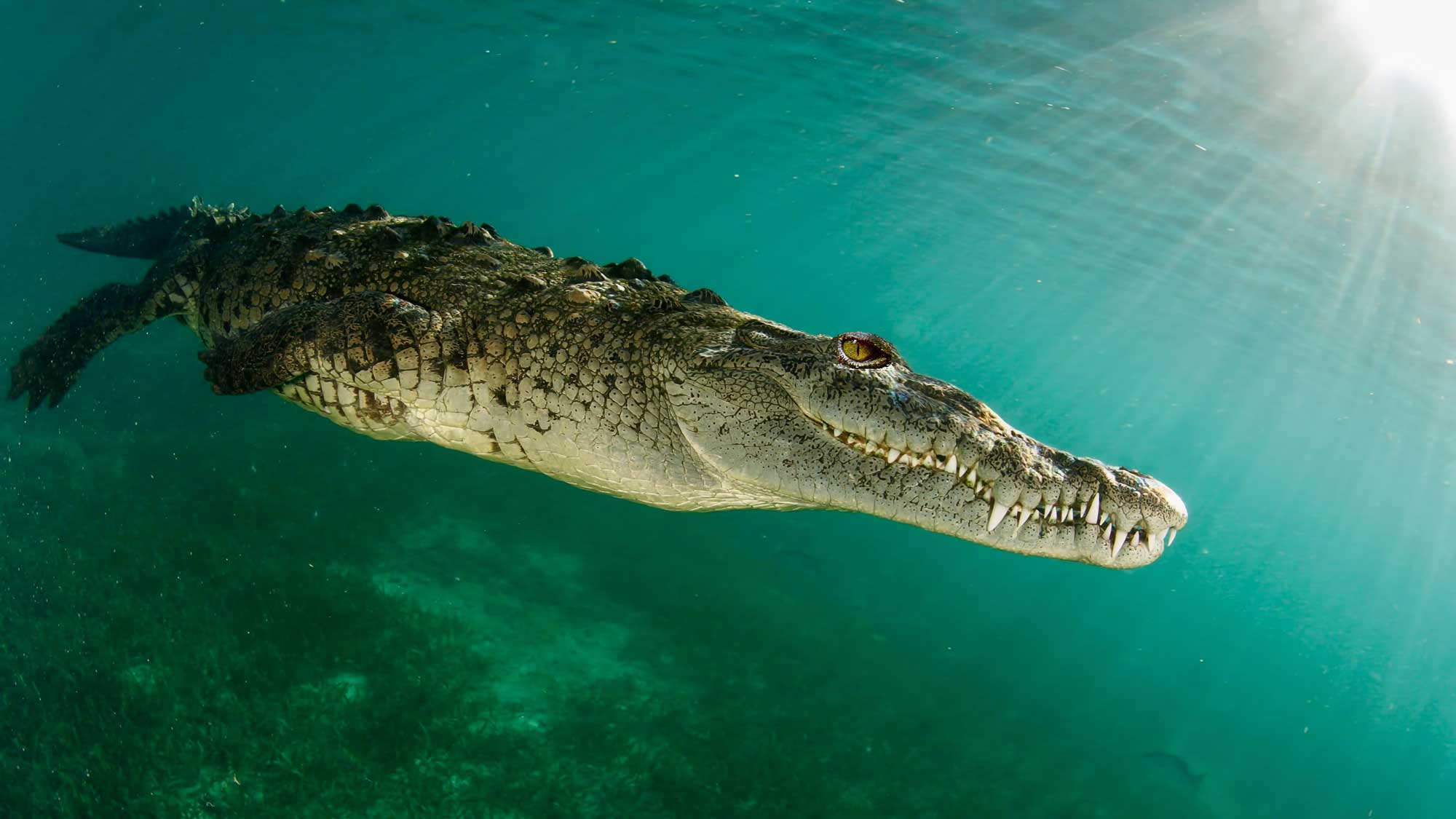
- The saltwater crocodile (Crocodylus porosus), also called the estuarine crocodile, Indo-Pacific crocodile, or simply "saltie," is the largest living reptile and one of the world's most formidable predators.
- Adult males can grow up to 6–7m (20–23ft) in length and weigh as much as 1,000–1,500kg .
- Saltwater crocodiles are found in coastal regions from India's east coast across Southeast Asia, the Sundaland, northern Australia, and as far as Micronesia.
- They inhabit saltwater habitats, brackish wetlands, and freshwater rivers, displaying a unique ability to thrive in seawater through specialized salt glands found on their tongues.
- Largest living reptile and the most massive terrestrial predator.
- Known for their aggressive and territorial nature,.
- Exceptional swimmers, they can often move hundreds of kilometers along coastlines.
- Life expectancy can exceed 70 years.
- Their populations are listed as Least Concern on the IUCN Red List.
- Saltwater crocodiles are regarded as highly dangerous to humans due to their size, power, and unpredictable behaviors.
Habitat Loss & Encroachment
- River bank encroachment, development, and agricultural expansion have reduced suitable basking, nesting, and foraging habitats.
- Degradation of mangrove and wetland ecosystems crucial for saltwater crocodiles remains a critical threat.
- Increased crocodile populations, especially in areas like Bhitarkanika and the Sundarbans, has led to more frequent interactions with humans.
- Crocodiles are targeted for their skin, meat, and alleged medicinal properties. Although once a major threat, poaching persists in some regions despite wildlife protection laws.
- Pollution, alteration of river flows, and erosion continue to impact important crocodile habitats. Sustainable management of river systems and estuaries is required for long-term survival.
- Annual censuses and ongoing monitoring of populations.
- Barricades at river ghats to minimize human-crocodile interactions.
- Discontinuation of breeding programs in regions (e.g., Bhitarkanika) where population saturation is reached.
- Continued efforts in habitat protection, community engagement, public education, and enforcement of conservation laws are critical for the future success of saltwater crocodile conservation in India.

