Red corridor
Why in news?
Killing of Madvi Hidma, a top Maoist commander is expected to trigger a further wave of Maoist surrenders and indicate a weakening of Maoist military leadership.
Historical backgouund
- Originated from the 1967 Naxalbari uprising in West Bengal, beginning as a peasant movement inspired by Maoist ideology.
- The movement led to the formation of various Maoist groups fighting an armed rebellion against the Indian state.
- Spread across eastern, central, and southern India, covering many districts in states like Chhattisgarh, Jharkhand, Odisha, Bihar, Maharashtra, and Andhra Pradesh.
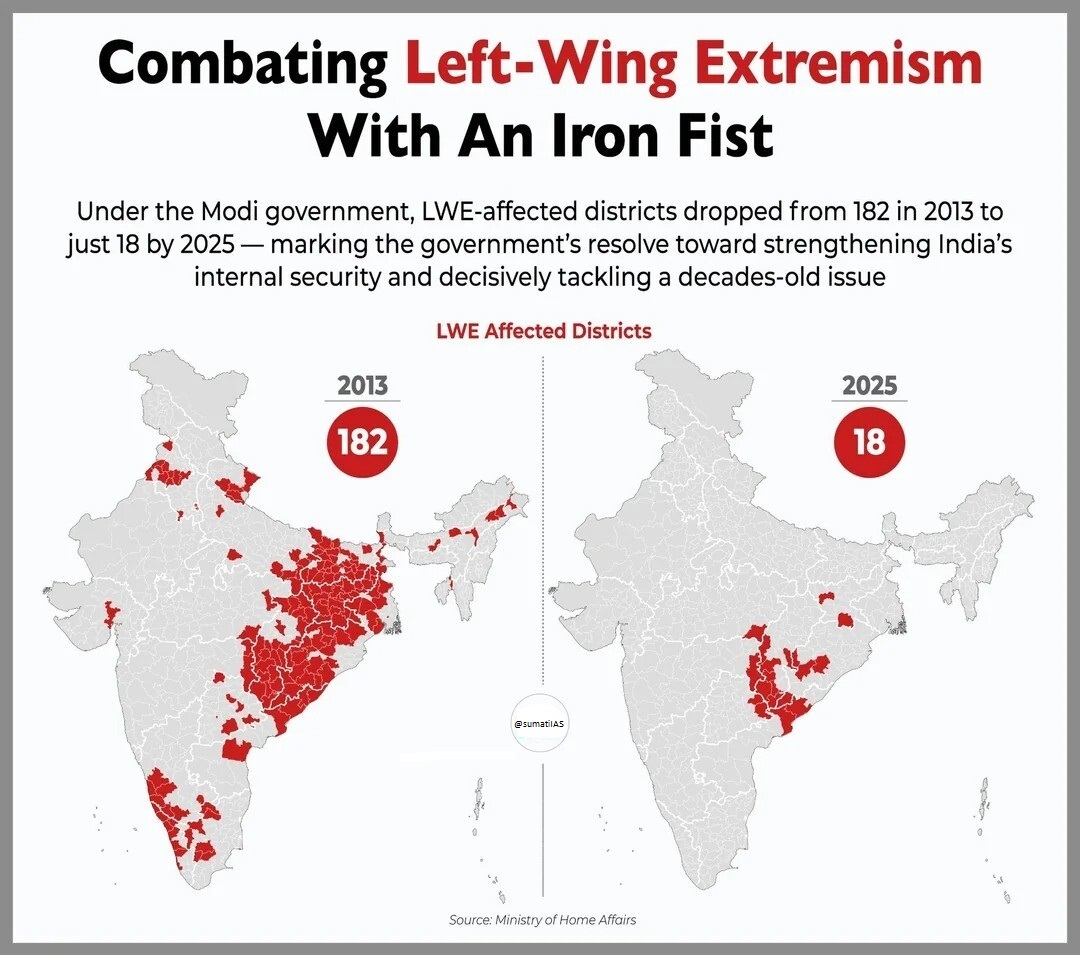
- At its peak in the late 2000s, the Red Corridor affected nearly 180 districts known for Naxalite-Maoist insurgency.
- The insurgency involved guerrilla warfare, extortion, attacks on security forces, destruction of infrastructure, and parallel governance.
- Naxalites gained influence in impoverished, underdeveloped regions where government presence was weak, sometimes acting as alternate authority.
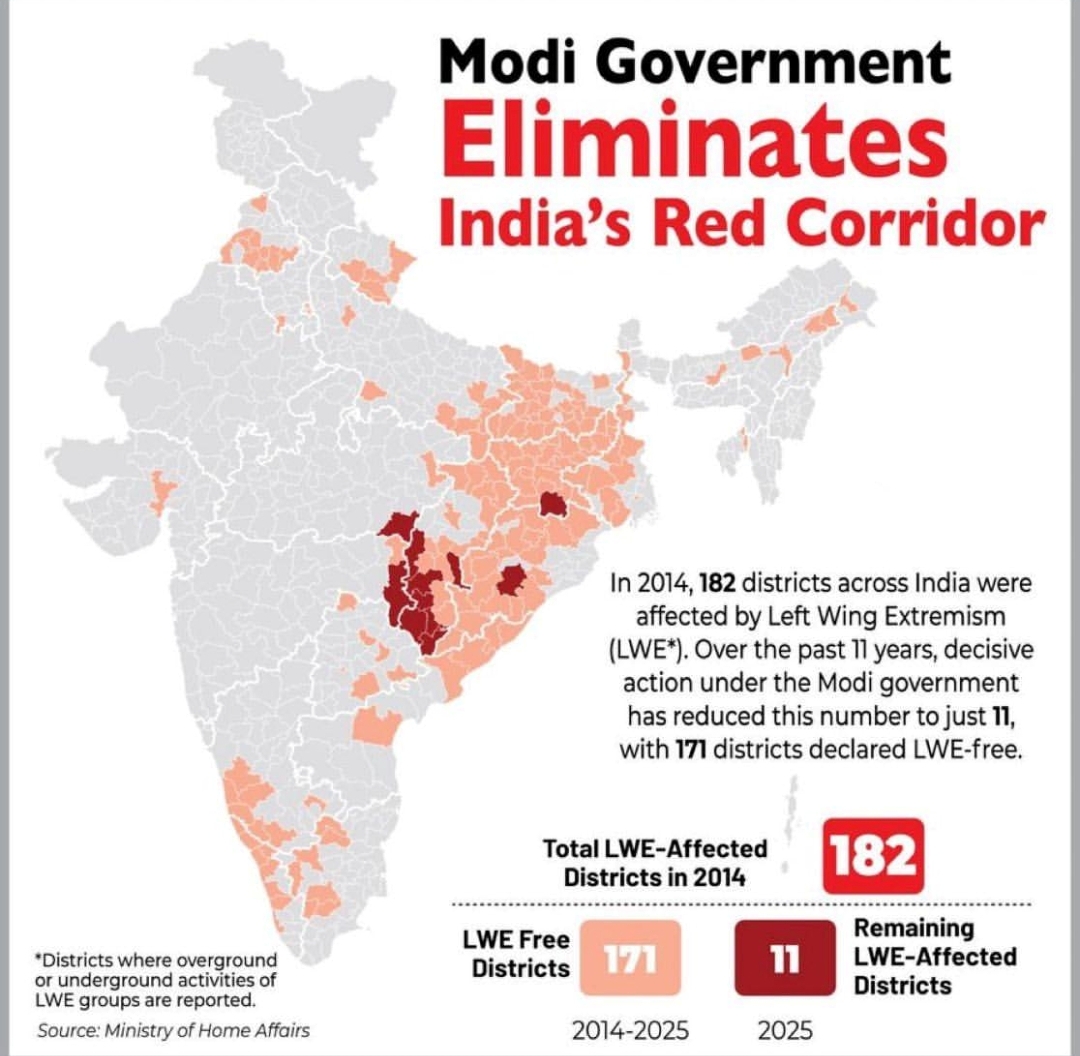
- It has significantly shrunk due to government counter-insurgency operations and developmental efforts.
- As of March 2025, only about 18 districts across 7 states remain affected, down from 182 districts in 2013.
- The corridor is largely limited to parts of Central and Eastern India, with 6 districts classified as 'most affected'.
- Security forces have regained control over previously inaccessible areas; development activities have increased including roads, schools, hospitals, and banking.
- The government aims to eradicate Naxalism by 2026.
- The Red Corridor is transitioning from a conflict zone to growth corridors marked by infrastructure and social development.
- The Maoist insurgency’s strategic and operational capability has diminished considerably.

