Meerut Bugle
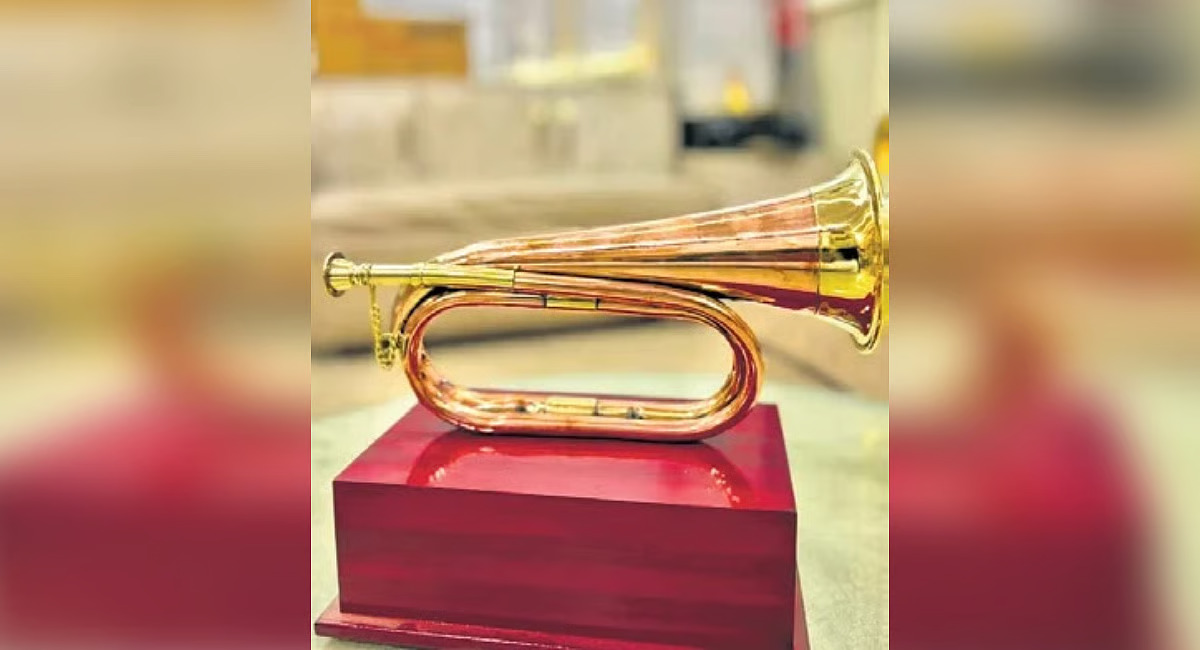
Why in news?
The Meerut Bugle, a handcrafted brass wind instrument from Meerut, Uttar Pradesh, received a Geographical Indication (GI) tag on November 20, 2025, becoming the first military-linked musical instrument in India to earn this recognition.
Origin and Craftsmanship
- Originating in the 1870s during British rule in Meerut Cantonment.
- the bugle is made from high-grade brass sheets using traditional hammering and soldering without machinery, featuring a unique "Meerut curve" for its piercing tone.
- Artisans produce it exclusively in Meerut, supplying Indian Army, CRPF, BSF, police, and NCC bands for parades and drills.
Historical Significance
- The instrument played roles in military communication, the 1857 uprising, and India's independence movement, sustaining over 5,000 artisan families through its golden era post-1947.
- By the 1990s, cheap imports threatened the craft, closing 70% of workshops and leaving about 250 masters.
GI Tag Benefits
- Legal protection against unauthorized use by non-origin producers.
- Higher market value and premium pricing due to authenticity and exclusivity.
- Enhanced brand recognition and global visibility for regional products.
- Boosts exports and access to international markets.
- Generates income for local artisans, farmers, and communities.
- Builds consumer confidence in quality and origin.
- Preserves cultural heritage, traditional knowledge, and practices.
- Promotes tourism and sustainable local economies.
Uttar Pradesh government plans include a Bugle Haat by 2026, skill training for 500 youth, e-commerce tie-ups, and an annual Meerut Bugle Mahotsav. Uttar Pradesh now leads India with 79 GI products. Download Pdf

