CE20 Cryogenic Engine
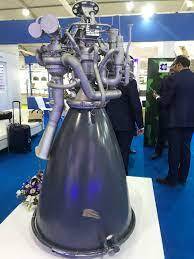
Why in news?
The CE20 Cryogenic Engine, developed by ISRO, has recently demonstrated successful operation under vacuum conditions—specifically, a "boot-strap mode" start test without any auxiliary start-up system.
About CE20 engine
- Indigenous LOX–LH2 cryogenic engine developed by ISRO’s Liquid Propulsion Systems Centre.
- Powers the C25 cryogenic upper stage of LVM3 (GSLV Mk‑III).
- Simulates the near‑zero atmospheric pressure of space, ensuring CE20 can ignite and run exactly as it will on the LVM3 upper stage in orbit.
- Confirms that propellant flow, combustion stability, and nozzle expansion behave correctly when there is no surrounding air.
- Carried out at the High‑Altitude Test (HAT) facility, Mahendragiri (Tamil Nadu), which uses pumps and chambers to create space‑like vacuum and realistic tank pressures.
- Successful ignition and steady operation under these conditions proves the engine is flight‑ready for critical missions like Gaganyaan human spaceflight.
- Conventional cryogenic engines in space use an auxiliary start system (e.g., stored high‑pressure gas) to spin turbopumps, adding mass and complexity.
- In boot‑strap mode, CE20 spins up its turbopumps and builds pressure using its own gas‑generator and propellant flow, without any external start‑gas system.
- A multi‑element igniter in both the thrust chamber and gas generator enables this autonomous start and smooth transition to steady‑state operation in vacuum.
- This method increases payload capacity, simplifies stage hardware, and is regarded as a world‑first demonstration for a gas‑generator‑cycle cryogenic engine, enhancing flexibility and efficiency of future LVM3 missions.

